Mathematics is much more than numbers and formulas. When students develop strong mathematical reasoning, they become better problem-solvers, critical thinkers, and confident learners. One of the best ways to nurture these skills is by participating in a well-structured Maths Challenge.
The International Maths Challenge is designed to inspire students to enjoy mathematics while competing with peers from different schools and countries. Unlike traditional exams that focus on memorization, the International Maths Challenge encourages logical thinking, creativity, and analytical reasoning.
Whether a student is already excelling in mathematics or looking to improve, participating in this prestigious Maths competition can be a transformative learning experience.
Why Maths Competitions Matter
Classroom learning builds the foundation, but competitions encourage students to apply their knowledge in new and challenging ways.
A Maths competition teaches students how to:
- Think critically under pressure
- Solve unfamiliar problems
- Develop multiple approaches to one question
- Improve speed and accuracy
- Build resilience after making mistakes
These skills extend far beyond mathematics and benefit students throughout their academic journey.
- Develops Strong Problem-Solving Skills
One of the biggest strengths of the International Maths Challenge is its focus on problem-solving rather than rote learning.
Students encounter questions that require them to:
- Analyze patterns
- Apply mathematical concepts creatively
- Think logically
- Eliminate incorrect possibilities
- Make informed decisions
Regular exposure to these challenges strengthens analytical thinking, making students better equipped for both academics and real-life situations.
- Builds Confidence in Mathematics
Many students feel nervous about mathematics because they fear making mistakes.
Participating in the International Maths Challenge helps students gradually overcome this fear.
As they solve increasingly challenging questions and see their progress, they begin to realize that success comes through practice and logical thinking, not simply memorizing formulas.
This confidence often translates into improved classroom performance and a more positive attitude toward mathematics.
- Encourages Healthy Academic Competition
Competition, when approached positively, motivates students to perform at their best.
The International Maths Challenge creates an environment where students strive for excellence while learning alongside talented peers from around the world.
Healthy competition teaches students:
- Goal setting
- Self-improvement
- Discipline
- Perseverance
- Sportsmanship
Rather than comparing themselves to others, students learn to compete with their own previous performance.
- Strengthens Logical and Analytical Thinking
Mathematics is fundamentally about logic.
The carefully designed questions in the International Maths Challenge encourage students to think step by step before reaching conclusions.
This improves:
- Logical reasoning
- Pattern recognition
- Deductive thinking
- Decision-making abilities
- Analytical skills
These abilities benefit subjects like science, computer programming, engineering, economics, and even everyday decision-making.
- Makes Maths Preparation More Effective
Preparing for a Maths competition naturally improves overall academic performance.
Effective maths preparation includes:
- Practicing challenging questions
- Understanding concepts deeply
- Managing time efficiently
- Identifying weak areas
- Reviewing mistakes regularly
Students who prepare consistently often find that school mathematics becomes easier because they have developed a stronger conceptual understanding.
- Improves Speed and Accuracy
Success in any Maths competition requires balancing speed with accuracy.
The International Maths Challenge encourages students to:
- Solve problems efficiently
- Avoid careless mistakes
- Prioritize questions wisely
- Improve calculation speed
- Develop effective time management
These skills are valuable for school examinations and future competitive tests.
- Encourages Independent Learning
Students preparing for the IMC become active learners.
Instead of waiting for classroom instruction, they begin exploring:
- New problem-solving techniques
- Advanced mathematical concepts
- Practice papers
- Logical reasoning puzzles
- Different solution methods
This habit of independent learning helps students become lifelong learners.
- Develops Persistence and Resilience
Every difficult question teaches an important lesson.
Students participating in the International Maths Challenge quickly understand that not every problem has an immediate solution.
Instead of giving up, they learn to:
- Stay patient
- Try different strategies
- Learn from mistakes
- Keep improving through practice
These qualities are essential not only in mathematics but also in academics, careers, and life.
- Inspires a Love for Mathematics
Many students discover that mathematics becomes enjoyable once they start solving interesting puzzles rather than repetitive textbook exercises.
The International Maths Challenge transforms mathematics into an engaging intellectual activity that rewards curiosity and creativity.
Students begin viewing maths as a subject to explore rather than one to fear.
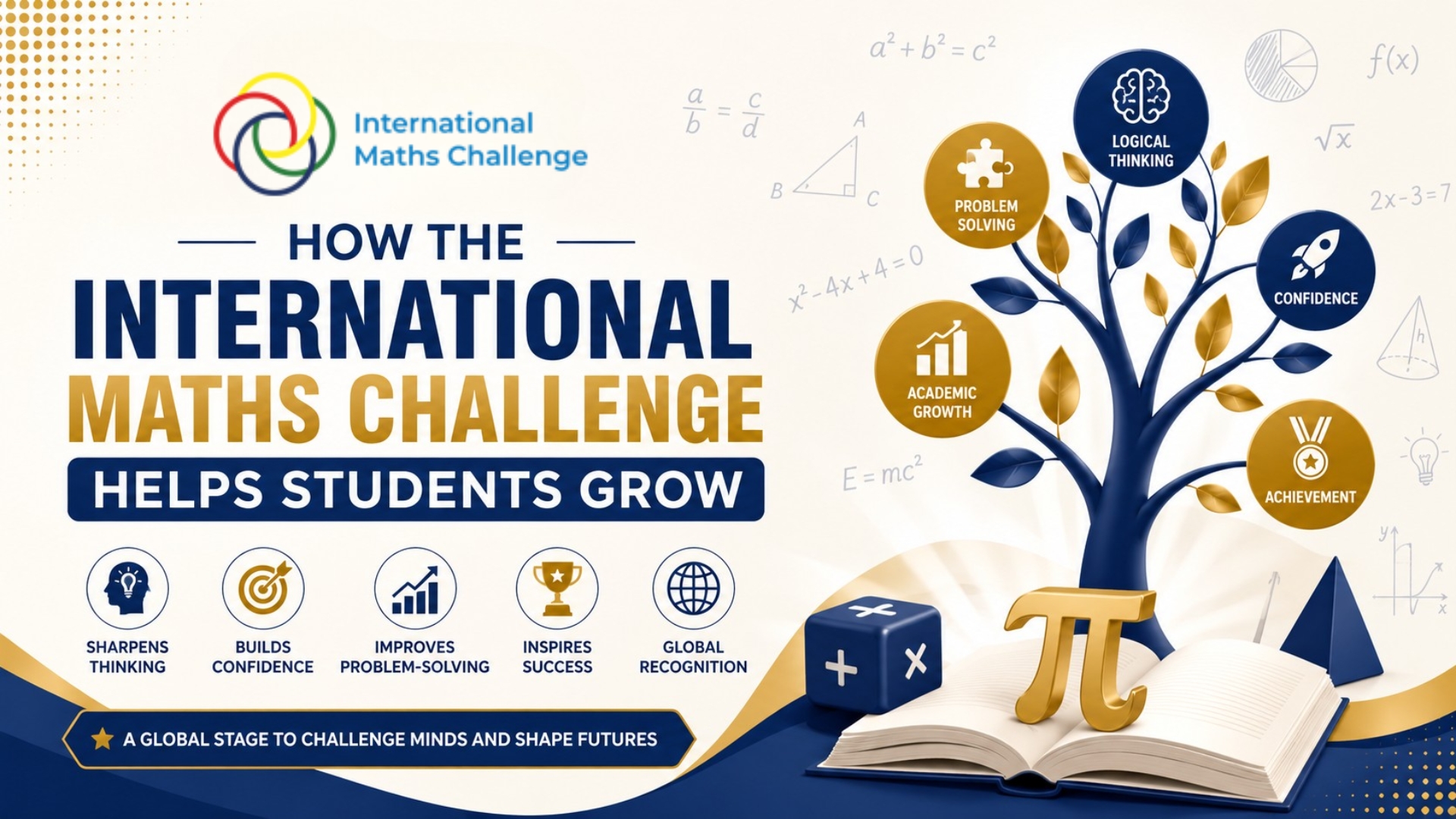
- Provides International Recognition
One unique advantage is the opportunity to compete on a global platform.
Students gain:
- International exposure
- Recognition for their achievements
- Certificates and awards
- Motivation to pursue higher goals
- A stronger academic profile
Such accomplishments can enhance students’ confidence and encourage continued participation in academic competitions.
How Parents Benefit
The International Maths Challenge is equally valuable for parents.
It helps parents:
- Understand their child’s mathematical strengths
- Identify areas needing improvement
- Encourage productive learning habits
- Motivate consistent practice
- Celebrate academic achievements
Rather than focusing solely on marks, parents can appreciate the development of valuable thinking skills.
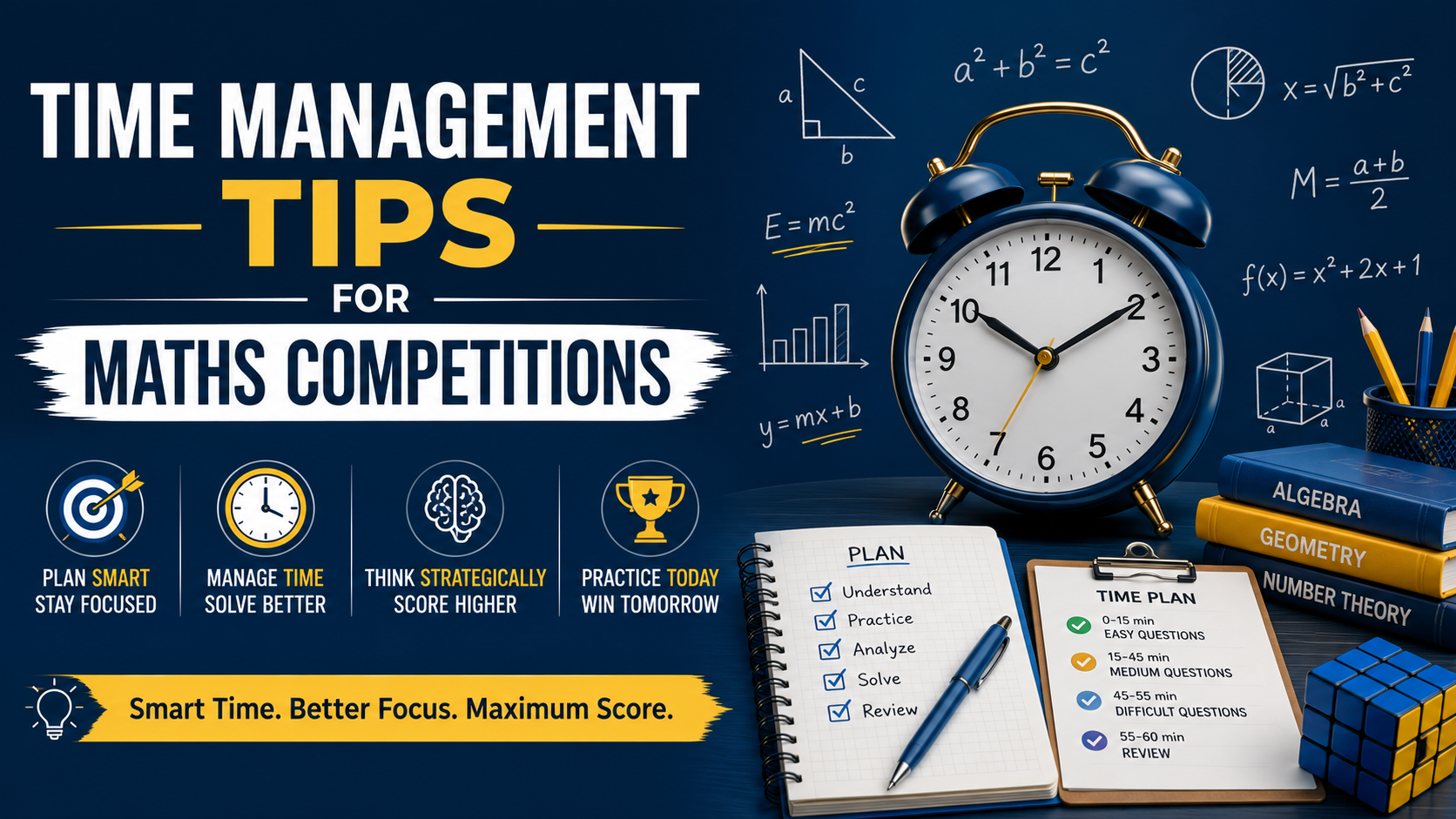
Tips for Effective Maths Preparation
Students preparing for Maths Challenge can improve their performance by following these practical strategies:
- Practice mathematics every day.
- Focus on understanding concepts instead of memorizing formulas.
- Solve previous competition-style questions.
- Work on logical reasoning and mental calculations.
- Learn multiple methods for solving problems.
- Review mistakes carefully.
- Practice under timed conditions.
- Stay consistent with revision.
Remember, successful maths preparation is about building understanding gradually through regular practice.
Why Choose the International Maths Challenge?
The International Maths Challenge is more than just another Maths competition.
It is an opportunity for students to:
- Improve mathematical confidence
- Develop advanced problem-solving abilities
- Learn logical reasoning
- Compete internationally
- Strengthen academic foundations
- Build discipline and perseverance
- Prepare for future competitive examinations
- Discover the joy of mathematics
Every challenge solved becomes a step toward becoming a stronger thinker and a more confident learner.
Final Thoughts
The journey of learning mathematics is not measured solely by classroom grades but by the ability to think, reason, and solve problems confidently. The International Maths Challenge provides students with the perfect platform to develop these lifelong skills while enjoying the excitement of a global Maths competition.
With consistent maths preparation, determination, and a willingness to learn from every challenge, students gain much more than certificates, they develop confidence, resilience, and a genuine appreciation for mathematics.
Whether your child is taking their first step into competitive mathematics or aiming to sharpen advanced skills, the International Maths Challenge offers an inspiring path toward academic and personal growth.