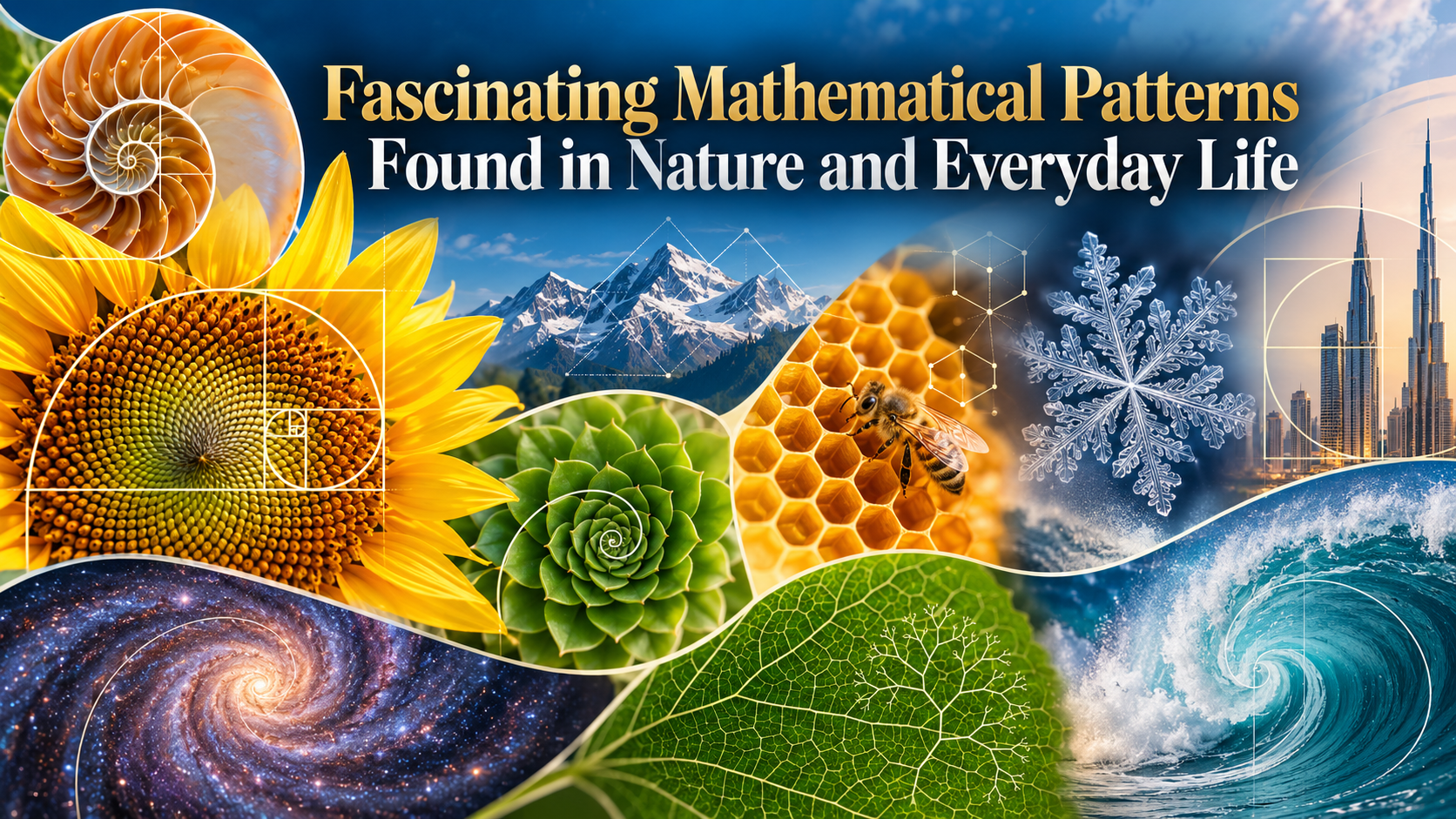
Mathematics is everywhere around us—not just in textbooks, equations, and classrooms. From the spirals of a sunflower to the symmetrical patterns of snowflakes, nature is filled with fascinating mathematical designs.
Have you ever wondered why honeycombs are made of hexagons or why tree branches form repeating patterns? These natural wonders reveal how mathematics helps us understand the world around us.
Let’s explore some incredible mathematical patterns found in nature and everyday life.
1. Fibonacci Sequence: The Secret Behind Natural Spirals
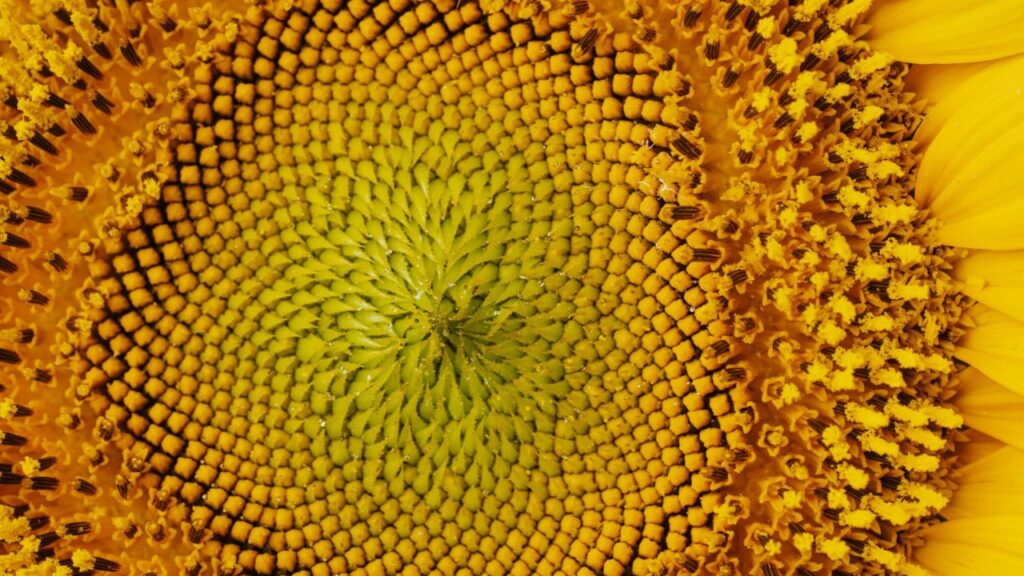
The Fibonacci sequence is a series of numbers in which each number is the sum of the two preceding numbers.
Example: 0, 1, 1, 2, 3, 5, 8, 13, 21, 34…
This sequence frequently appears in the arrangement of sunflower seeds, pinecones, and certain plants. These patterns help researchers understand how plants organise their growing structures.
The Fibonacci sequence is also connected to the golden ratio, approximately 1.618, which appears in some mathematical models of natural growth.
2. Fractals: Patterns That Repeat Themselves
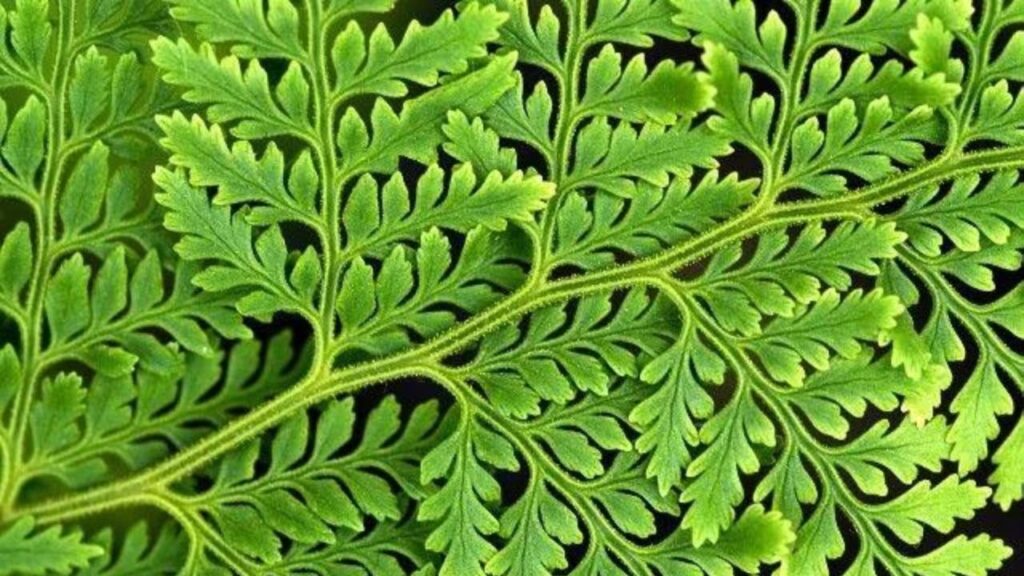
Fractals are patterns that show similar structures at different scales. Look at a tree: its trunk divides into branches, which divide into smaller branches and twigs.
Similar patterns can be found in ferns, Romanesco broccoli, coastlines, and clouds.
Fractal geometry helps scientists describe complex structures that cannot easily be represented by simple circles, squares, or triangles.
3. Honeycombs: Why Do Bees Use Hexagons?
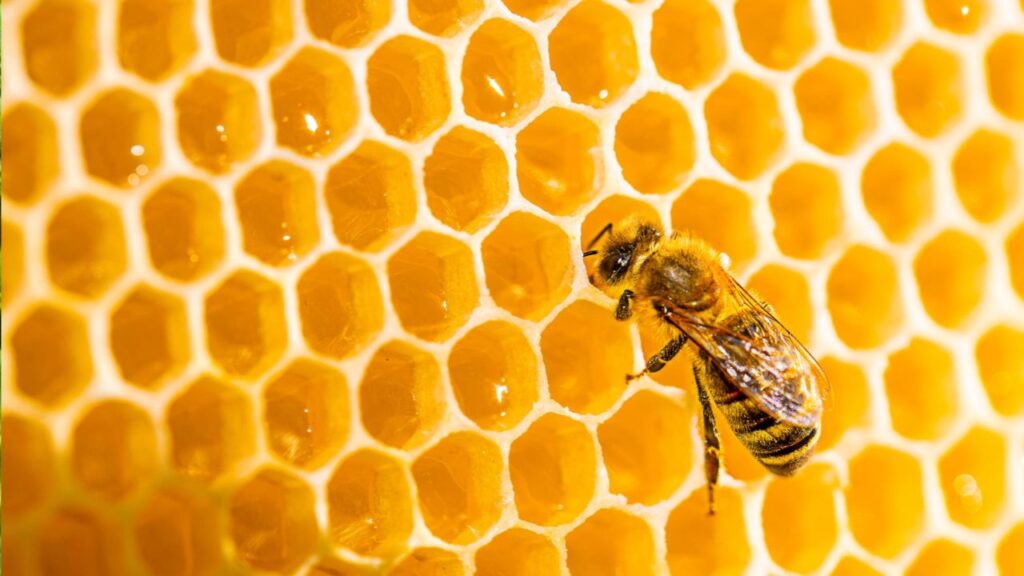
Honeycombs are made of repeating hexagonal cells. But why hexagons?
Regular hexagons fit together without gaps and can enclose a given area with relatively little boundary length compared with regular triangles and squares.
This makes hexagonal structures an efficient way to build connected cells. The pattern is a remarkable example of geometry appearing in the natural world.
Hexagons also appear in materials such as graphene and in certain geological formations.
4. Symmetry in Snowflakes and Flowers
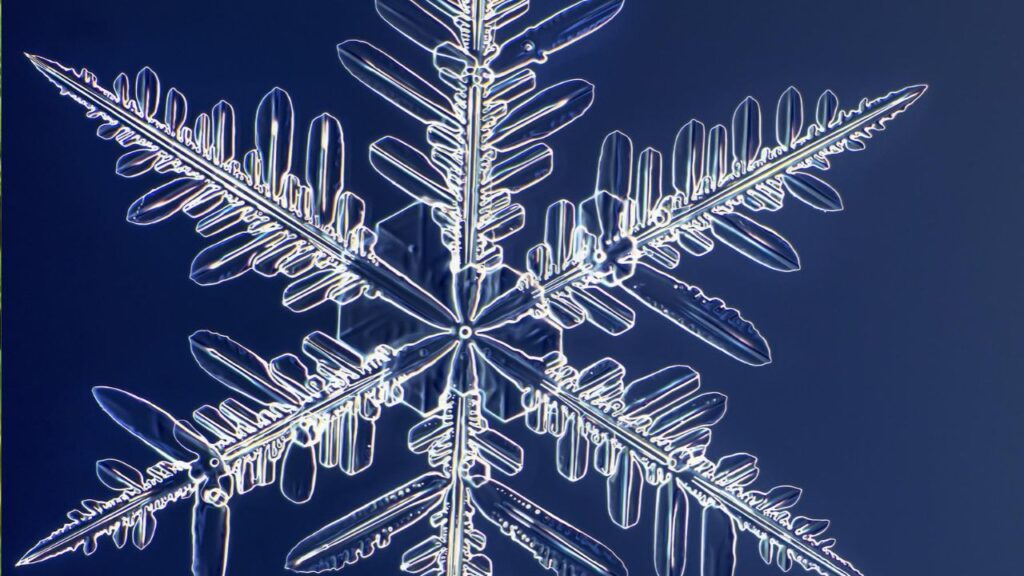
Symmetry occurs when a shape remains unchanged under a transformation, such as reflection or rotation.
Snowflakes typically exhibit sixfold symmetry because of the molecular structure of ice. Many flowers display radial symmetry, while butterflies often show approximate reflection symmetry.
Symmetry is also important in architecture, art, and design, where it helps create balanced and repeating visual patterns.
5. Spirals in Seashells and Galaxies
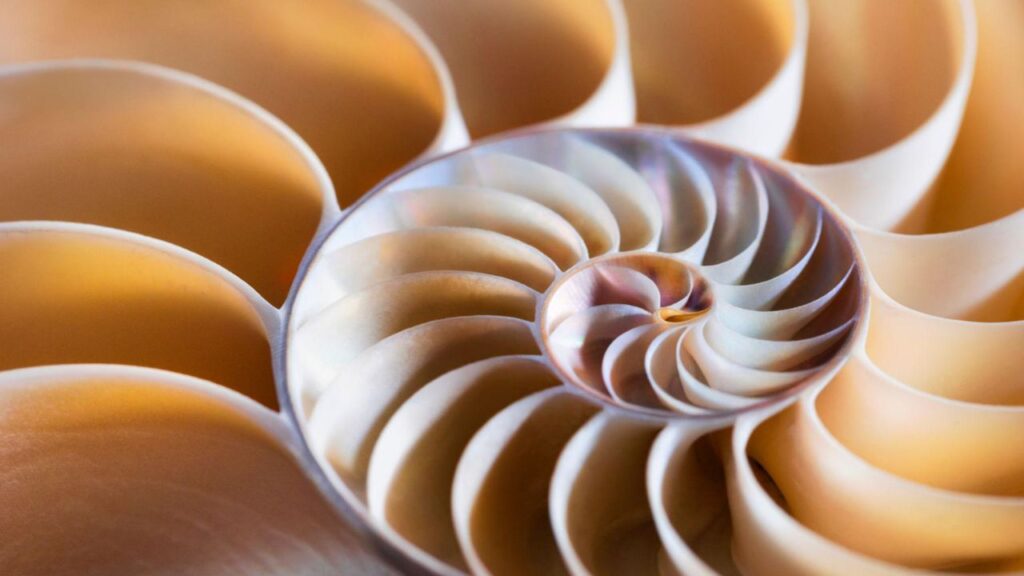
Spirals can be found in seashells, hurricanes, and spiral galaxies. One mathematical model used to describe certain spirals is the logarithmic spiral, in which the distance from the centre increases as the curve turns.
Different natural spirals form through different processes, including biological growth, atmospheric motion, and gravitational effects.
Studying these shapes helps mathematicians and scientists understand how complex structures develop.
6. Mathematics in Everyday Life

Mathematical patterns are not limited to nature. They are part of our daily routines, too.
-
Architecture: Triangles provide rigidity in many structural frameworks.
-
Music: Rhythm uses fractions, timing, and repeating sequences.
-
Road networks: Graph theory helps analyse routes and connections.
-
Tile designs: Tessellations cover surfaces using repeating shapes without gaps.
-
Games of chance: Probability helps us understand the likelihood of different outcomes.
These examples show that mathematics is a practical tool for solving problems and understanding everyday experiences.
Conclusion
Mathematics connects the natural world with human creativity and scientific discovery. From the spirals of plants to the geometry of buildings, these patterns demonstrate how simple mathematical principles can explain surprisingly complex structures.
The next time you observe a flower, a snowflake, or a geometric design, look closely—you might discover mathematics hiding in plain sight.
Continue with more articles on International Maths Challenge.