?> Maths Learning Archives - International Maths Challenge

Maths is most popular A-level again – more students should get the opportunity to take their study further

Gorodenkoff/Shutterstock

In 2025, more young people than ever have opened their A-level results to find out how they did in their maths exam. Once again, maths has been the most popular A-level subject, with 112,138 entries in 2025.

This is up by more than 4% compared with 2024. Entries in further maths, an A-level that expands on the maths curriculum, have also risen – an increase of 7% since 2024, with over 19,000 entries this year.

As a professional mathematician this is pleasing news. Some of these students will be happily receiving confirmation of their place to study maths at university.

The joy I experienced when I discovered in my maths degree that many of the subjects I studied at school – chemistry, biology, physics and even music – are woven together by a mathematical fabric, is something I’ve never forgotten.

I’m excited by the idea that many young people are about to experience this for themselves. But I am concerned that fewer students will have the same opportunities in the future, as more maths departments are forced to downsize or close, and as we become more reliant on artificial intelligence.

There are a number of differences between studying maths at university compared with school. While this can be daunting at first, all of these differences underscore just how richly layered, deeply interconnected and vastly applicable maths is.

At university, not only do you learn beautiful formulas and powerful algorithms, but also grapple with why these formulas are true and dissect exactly what these algorithms are doing. This is the idea of the “proof”, which is not explored much at school and is something that can initially take students by surprise.

But proving why formulas are true and why algorithms work is an important and necessary step in being able discover new and exciting applications of the maths you’re studying.

Maths degrees involve finding out why mathematics works the way it does. Gorodenkoff/Shutterstock

A maths degree can lead to careers in finance, data science, AI, cybersecurity, quantum computing, ecology and climate modelling. But more importantly, maths is a beautifully creative subject, one that allows people to be immensely expressive in their scientific and artistic ideas.

A recent and stunning example of this is Hannah Cairo, who at just 17 disproved a 40-year old conjecture.

If there is a message I wish I knew when I started studying university mathematics it is this: maths is not just something to learn, but something to create. I’m continually amazed at how my students find new ways to solve problems that I first encountered over 20 years ago.

Accessiblity of maths degrees

But the question of going on to study maths at university is no longer just a matter of A-level grades. The recent and growing phenomenon of maths deserts – areas of the country where maths degrees are not offered – is making maths degrees less accessible, particularly for students outside of big cities.

Forthcoming research from The Campaign for Mathematical Sciences (CAMS), of which I am a supporter, shows that research-intensive, higher tariff universities – the ones that require higher grades to get in – took 66% of UK maths undergraduates in 2024, up from 56% in 2006.

This puts smaller departments in lower-tariff universities in danger of closure as enrolments drop. The CAMS research forecasts that an additional nine maths departments will have fewer than 50 enrolments in their degrees by 2035.

This cycle will further concentrate maths degrees in high tariff institutions, reinforcing stereotypes such as that only exceptionally gifted people should go on to study maths at university. This could also have severe consequences for teacher recruitment. The CAMS research also found that 25% of maths graduates from lower-tariff universities go into jobs in education, compared to 8% from higher tariff universities.

Maths in the age of AI

The growing capability and sophistication of AI is also putting pressure on maths departments

With Open AI’s claim that their recently released GPT-5 is like having “a team of PhD-level experts in your pocket”, the temptation to overly rely on AI poses further risks to the existence and quality of future maths degrees.

But the process of turning knowledge into wisdom and theory into application comes from the act of doing: doing calculations and forming logical and rigorous arguments. That is the key constituent of thinking clearly and creatively. It ensures students have ownership of their skills, capacities, and the work that they produce.

A data scientist will still require an in-depth working knowledge of the mathematical, algorithmic and statistical theory underpinning data science if they are going to be effective. The same for financial analysts, engineers and computer scientists.

The distinguished mathematician and computer scientist Leslie Lamport said that “coding is to programming what typing is to writing”. Just as you need to have some idea of what you are writing before you type it, you need to have some idea of the (mathematical) algorithm you are creating before you code it.

It is worth remembering that the early pioneers in AI – John McCarthy, Marvin Minsky, Claude Shannon, Alan Turing – all had degrees in mathematics. So we have every reason to expect that future breakthroughs in AI will come from people with mathematics degrees working creatively in interdisciplinary teams.

This is another great feature of maths: its versatility. It’s a subject that doesn’t just train you for a job but enables you to enjoy a rich and fulfilling career – one that can comprise many different jobs, in many different fields, over the course of a lifetime.

For more such insights, log into www.international-maths-challenge.com.

*Credit for article given to Neil Saunders*


Mississippi’s education miracle: A model for global literacy reform

Mississippi’s reforms have led to significant gains in reading and math, despite the state being one of the lowest spenders per pupil in the U.S. Klaus Vedfelt/Getty Images

In a surprising turnaround, Mississippi, once ranked near the bottom of U.S. education standings, has dramatically improved its student literacy rates.

As of 2023, the state ranks among the top 20 for fourth grade reading, a significant leap from its 49th-place ranking in 2013. This transformation was driven by evidence-based policy reforms focused on early literacy and teacher development.

The rest of the country might want to take note.

That’s because Mississippi’s success offers a proven solution to the reading literacy crisis facing many states – a clear road map for closing early literacy gaps and improving reading outcomes nationwide.

As an expert on the economics of education, I believe the learning crisis is not just an educational issue. It’s also economic.

When students struggle, their academic performance declines. And that leads to lower test scores. Research shows that these declining scores are closely linked to reduced economic growth, as a less educated workforce hampers productivity and innovation.

The Mississippi approach

In 2013, Mississippi implemented a multifaceted strategy for enhancing kindergarten to third grade literacy. The Literacy-Based Promotion Act focuses on early literacy and teacher development. It includes teacher training in proven reading instruction methods and teacher coaching.

Relying on federally supported research from the Institute of Education Science, the state invested in phonics, fluency, vocabulary and reading comprehension. The law provided K-3 teachers with training and support to help students master reading by the end of third grade.

It includes provisions for reading coaches, parent communication, individual reading plans and other supportive measures. It also includes targeted support for struggling readers. Students repeat the third grade if they fail to meet reading standards.

The state also aligned its test to the NAEP, or National Assessment of Educational Progress, something which not all states do. Often referred to as “The Nation’s Report Card,” the NAEP is a nationwide assessment that measures student performance in various subjects.

Mississippi 4th graders’ reading improved the most from 2013 to 2022

According to federal data, fourth graders’ reading scores improved by nine points in Mississippi from 2013 to 2022. At the other end of the spectrum, Maryland fourth graders’ reading levels fell by 20 points over the same period.

Mississippi’s reforms have led to significant gains in reading and math, with fourth graders improving on national assessments.

I believe this is extremely important. That’s because early reading is a foundational skill that helps develop the ability to read at grade level by the end of third grade. It also leads to general academic success, graduating from high school prepared for college, and becoming productive adults less likely to fall into poverty.

Research by Noah Spencer, an economics doctoral student at the University of Toronto, shows that the Mississippi law boosted scores.

Students exposed to it from kindergarten to the third grade gained a 0.25 standard deviation improvement in reading scores. That is roughly equivalent to one year of academic progress in reading, according to educational benchmarks. This gain reflects significant strides in students’ literacy development over the course of a school year.

Another study has found an even greater impact attributed to grade retention in the third grade – it led to a huge increase in learning in English Language Arts by the sixth grade.

But the Mississippi law is not just about retention. Spencer found that grade retention explains only about 22% of the treatment effect. The rest is presumably due to the other components of the measure – namely, teacher training and coaching.

Other previous research supports these results across the country.

Adopting an early literacy policy improves elementary students’ reading achievement on important student assessments, with third grade retention and instructional support substantially enhancing English learners’ skills. The policy also increases test scores for students’ younger siblings, although it is not clear why.

Moreover, third grade retention programs immediately boost English Language Arts and math achievements into middle school without disciplinary incidents or negatively impacting student attendance.

These changes were achieved despite Mississippi being one of the lowest spenders per pupil in the U.S., proving that strategic investments in teacher development and early literacy can yield impressive results even with limited resources.

The global learning crisis

Mississippi’s success is timely. Millions of children globally struggle to read by age 10. It’s a crisis that has worsened after the COVID-19 pandemic.

Mississippi’s early literacy interventions show lasting impact and offer a potential solution for other regions facing similar challenges.

In 2024, only 31% of U.S. fourth grade students were proficient or above in reading, according to the NAEP, while 40% were below basic. Reading scores for fourth and eighth graders also dropped by five points compared with 2019, with averages lower than any year since 2005.

In 2013, Mississippi ranked 49th in fourth grade reading scores. Klaus Vedfelt/Getty Images

Mississippi’s literacy program provides a learning gain equal to a year of schooling. The program costs US$15 million annually – 0.2% of the state budget in 2023 – and $32 per student.

The learning gain associated with the Mississippi program is equal to about an extra quarter of a year. Since each year of schooling raises earnings by about 9%, then a quarter-year gain means that Mississippi students benefiting from the program will increase future earnings by 2.25% a year.

Based on typical high school graduate earnings, the average student can expect to earn an extra $1,000 per year for the rest of their life.

That is, for every dollar Mississippi spends, the state gains about $32 in additional lifetime earnings, offering substantial long-term economic benefits compared with the initial cost.

The Mississippi literacy project focuses on teaching at the right level, which focuses on assessing children’s actual learning levels and then tailoring instruction to meet them, rather than strictly following age- or grade-level curriculum.

Teaching at the right level and a scripted lessons plan are among the most effective strategies to address the global learning crisis. After the World Bank reviewed over 150 education programs in 2020, nearly half showed no learning benefit.

I believe Mississippi’s progress, despite being the second-poorest state, can serve as a wake-up call.

For more such insights, log into www.international-maths-challenge.com.

*Credit for article given to Harry Anthony Patrinos*


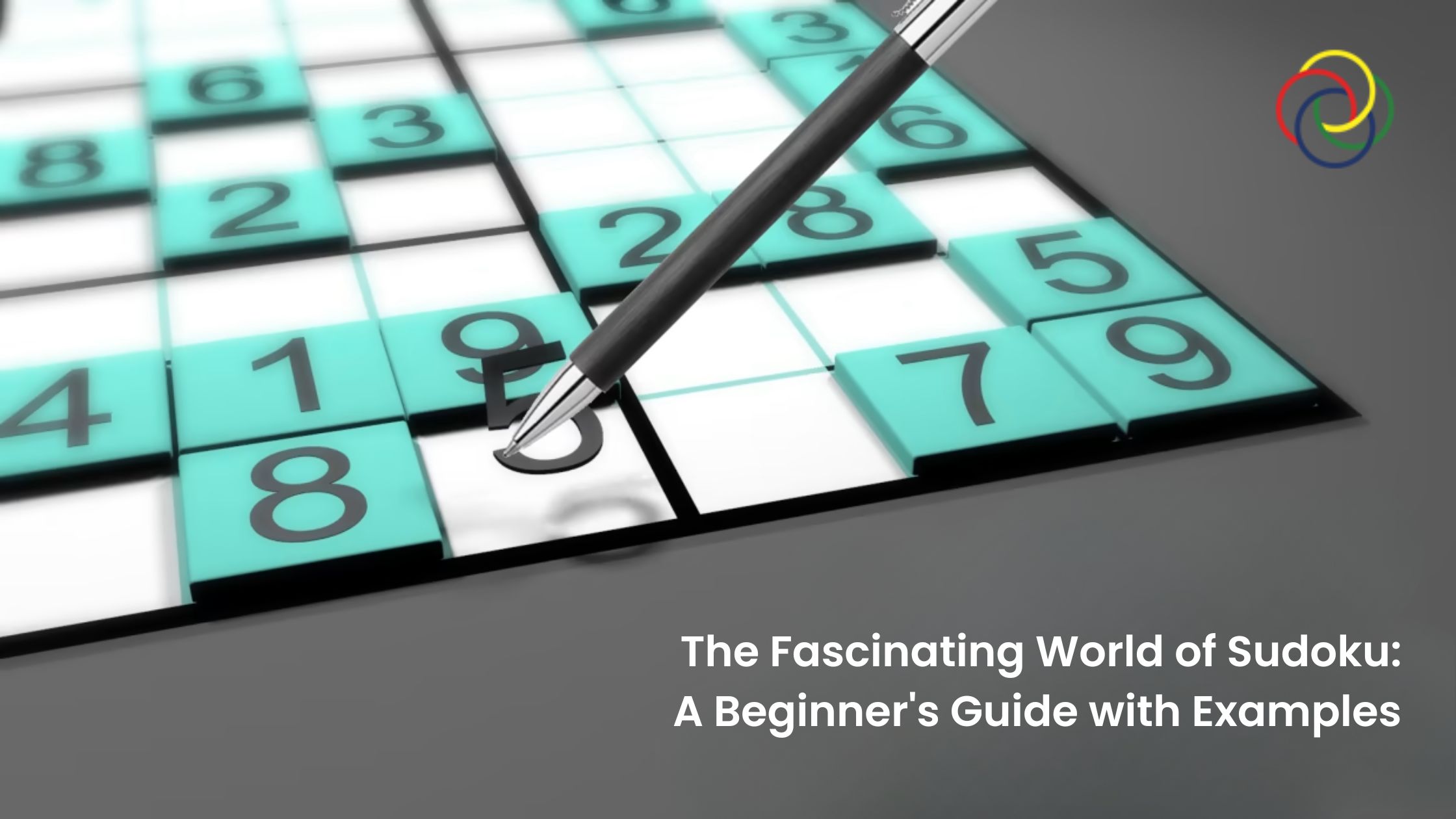
The Fascinating World of Sudoku: A Beginner’s Guide with Examples

Sudoku, the classic number puzzle, has captured the minds of puzzle enthusiasts around the globe. Originating from Japan, the name Sudoku translates to “single number,” reflecting the puzzle’s core principle: each number should appear only once in each row, column, and grid. This article will introduce you to the basics of Sudoku, walk you through some examples, and offer tips to enhance your solving skills.

What is Sudoku?

Sudoku is a logic-based puzzle game typically played on a 9×9 grid divided into nine 3×3 subgrids. The objective is to fill the grid with numbers from 1 to 9, ensuring that each row, each column, and each 3×3 subgrid contains all the numbers from 1 to 9 without repetition.

Basic Rules of Sudoku:

  1. Each row must contain the numbers 1 to 9, without repetition.
  2. Each column must contain the numbers 1 to 9, without repetition.
  3. Each 3×3 subgrid must contain the numbers 1 to 9, without repetition.

How to Solve a Sudoku Puzzle

Step-by-Step Example

Let’s walk through a simple Sudoku puzzle to understand the solving process.

Initial Puzzle:

5 3 _ | _ 7 _ | _ _ _

6 _ _ | 1 9 5 | _ _ _

_ 9 8 | _ _ _ | _ 6 _

——+——-+——

8 _ _ | _ 6 _ | _ _ 3

4 _ _ | 8 _ 3 | _ _ 1

7 _ _ | _ 2 _ | _ _ 6

——+——-+——

_ 6 _ | _ _ _ | 2 8 _

_ _ _ | 4 1 9 | _ _ 5

_ _ _ | _ 8 _ | _ 7 9

Step 1: Start with the Easy Ones

Begin by looking for rows, columns, or subgrids where only one number is missing. For instance, in the first row, the missing numbers are 1, 2, 4, 6, 8, and 9. However, given the other numbers in the row and subgrid, you can often narrow down the possibilities.

Step 2: Use the Process of Elimination

In the first 3×3 subgrid (top left), we are missing the numbers 1, 2, 4, 6, 7. By checking the rows and columns intersecting the empty cells, we can often deduce which numbers go where.

Example Fill-In:

  • For the empty cell in the first row, third column, the possible numbers are 1, 2, 4, 6, 8, 9. However, since 6 and 9 are in the same column and 8 is in the same row, the number for this cell must be 2.

Step 3: Repeat the Process

Continue using the process of elimination and logical deduction for the remaining cells. Let’s fill in a few more:

  • For the second row, second column, the missing numbers are 2, 3, 4, 7, 8. Since 3 and 8 are already in the same subgrid, we need to see which other numbers fit based on the column and row.

Intermediate Puzzle:

5 3 2 | _ 7 _ | _ _ _

6 _ _ | 1 9 5 | _ _ _

_ 9 8 | _ _ _ | _ 6 _

——+——-+——

8 _ _ | _ 6 _ | _ _ 3

4 _ _ | 8 _ 3 | _ _ 1

7 _ _ | _ 2 _ | _ _ 6

——+——-+——

_ 6 _ | _ _ _ | 2 8 _

_ _ _ | 4 1 9 | _ _ 5

_ _ _ | _ 8 _ | _ 7 9

Step 4: Solve the Puzzle

By continuing to apply these methods, you will gradually fill in the entire grid. Here’s the completed puzzle for reference:

5 3 4 | 6 7 8 | 9 1 2

6 7 2 | 1 9 5 | 3 4 8

1 9 8 | 3 4 2 | 5 6 7

——+——-+——

8 5 9 | 7 6 1 | 4 2 3

4 2 6 | 8 5 3 | 7 9 1

7 1 3 | 9 2 4 | 8 5 6

——+——-+——

9 6 1 | 5 3 7 | 2 8 4

2 8 7 | 4 1 9 | 6 3 5

3 4 5 | 2 8 6 | 1 7 9

Tips for Solving Sudoku

  1. Start with the obvious: Fill in the easy cells first to gain momentum.
  2. Use pencil marks: Write possible numbers in cells to keep track of your thoughts.
  3. Look for patterns: Familiarize yourself with common patterns and techniques, such as naked pairs, hidden pairs, and X-Wing.
  4. Stay organized: Work methodically through rows, columns, and sub grids.
  5. Practice regularly: The more you practice, the better you’ll get at spotting solutions quickly.

Conclusion

Sudoku is a fantastic way to challenge your brain, improve your logical thinking, and enjoy a bit of quiet time. Whether you’re a beginner or an experienced solver, the satisfaction of completing a Sudoku puzzle is a reward in itself. So, grab a puzzle, follow these steps, and immerse yourself in the fascinating world of Sudoku!