Protecting confidential data with math

Statistical databases (SDBs) are collections of data that are used to gather and analyse information from a variety of sources. The data may be derived from sales transactions, customer files, voter registrations, medical records, employee rosters, product inventories, or other compilations of facts and figures.

Because database security requires multiple processes and controls, it presents huge security challenges to organizations. With the computerization of databases in healthcare, forensics, telecommunications, and other fields, ensuring this kind of security has become increasingly important.

In a paper published Thursday in the SIAM Journal on Discrete Mathematics, authors Rudolf Ahlswede and Harout Aydinian analyse a security-control model for statistical databases.

“Providing privacy and confidentiality in SDBs is not a new issue,” Aydinian points out. “Privacy interests have evolved from the very first census in the United States. Recorded protests until the mid-20th century reflect constitutional issues resulting from the requirement for U.S. residents to provide sensitive personal information. Questions on census forms about diseases, mortgage values, and other items have raised many concerns.”

While such databases are very helpful in aggregating data, there is a risk that confidential information about an individual’s record may be deliberately compromised. “Since such data sets also contain sensitive information, such as the disease of an individual, or the salary of an employee, it is necessary to provide security against the disclosure of confidential information,” says Aydinian. “Even in cases where a user has no direct access to sensitive information, sometimes confidential data about an individual can be inferred by correlating enough statistics.”

Typically, statistical databases are designed to only accept queries that involve specific statistical functions (such as sum, average, count, min, max, etc.). However, the use of these queries may render databases susceptible to compromise. For instance, it may be possible to infer information about specific individuals by putting together data from a sequence of statistical queries, using prior knowledge of an individual, or through collusion among users.

An SDB is considered secure if no protected data can be inferred from available queries. “In the literature, many scenarios of compromise and inference control methods have been proposed to protect SDBs,” Aydinian says. “However, to date no one security control method is capable of completely preventing compromise.”

Query restriction is one of several general approaches used for security control. A “query request” retrieves a subset of data from a database that meets a set of conditions. In query restriction, the kind and amount of data that can be retrieved by such queries is limited, for example, the size of the data, or the amount of overlap between data that is returned.

In one type of query restriction method, only certain sums of individual records (called “SUM queries”) that meet a minimum specified size or number, and satisfy a specified set of conditions, are available to users.

Aydinian explains with an example. “Consider a company with a large number of employees. Suppose that for each member of the company, the sex, age, rank, length of employment, salary etc. is recorded. The salaries of individual employees are confidential. Suppose that only SUM queries are allowed, i.e. the sum of the salaries of the specified people is returned. Then one might pose the query: What is the sum of salaries for males, above 50, and during the last 10 years?”

The task addressed in the paper is to provide an optimal collection of SUM queries that prevents compromise of confidential information—such as individual salaries, for instance. A natural solution is to maximize the number of available SUM queries. The authors obtain tight bounds for the maximum number of such queries that return subsets of data without compromising groups of entries.

“Future work in the query-restriction approach includes evaluation of new security-control mechanisms, which are easy to implement and guarantee absolute security,” says Aydinian. “At the same time, it is desirable that these methods satisfy other criteria like richness of available queries, consistency, cost etc. It also seems promising to develop methods combining different security control mechanisms.”

For more such insights, log into our website https://international-maths-challenge.com

Credit of the article given to Society for Industrial and Applied Mathematics


Digital alchemy: Sir Isaac Newton’s papers now online

The notebooks of Sir Isaac Newton, who was famously reported to have suffered a (scientifically) earth-shaking blow to the head from an apple, are being scanned and published online by the University of Cambridge.

Newton, a Biblical numerologist when he wasn’t developing calculus or building the first reflecting telescope, founded classical mechanics with Philosophiæ Naturalis Principia Mathematica (Mathematical Principles of Natural Philosophy), which was first published in 1687. In the book that made his name, Newton set out his three laws of motion, and his theory of universal gravitation (prompted by pondering what force plummeted the fruit straight down onto his head, or so goes the apocryphal tale).

Newton studied and later held the Lucasian Chair of Mathematics at Cambridge, which was given numerous manuscripts of his in 1872 and has since bought more. The online publication has started with Newton’s mathematical works of the 1660s and more papers will become available over coming months.

A philosopher of science at Flinders University, George Couvalis, said that Newton’s gravitational experiments – which largely corrected ancient observations of gravity – were sparked by his interest in magic and magnetism. “The idea that things might naturally attract one another is an idea that he got from magical ideas. He adapted it across to mathematical theory because it was a mystical theory,” Dr Couvalis said

It was important to remember that scientists of Newton’s era did not have what we would consider a modern sceptical outlook and – with the exception of the “exceptional” Galileo Galilei – instead held a fusion of views that we would consider deeply irrational, Dr Couvalis said.

“It was certainly far more common in the 17th and 18th centuries for scientists to be interested in magical beliefs and alchemical beliefs and religious beliefs. Johannes Kepler, for example, had all kinds of strange views about the music of the spheres, Copernicus had strange views about the sacredness of the sun, and Newton famously had views about the mysterious numerical meanings of Biblical passages and about alchemical material,” Dr Couvalis said.

Scientists of the period saw their work touching on many illogical and occult fields of interest, including Robert Boyle, a founder of modern chemistry, who had “an interest in doing experimental research on magical mirrors, which to us would sound bizarre but at the time it was thought to be a possibility,” said Dr Couvalis, who added that Boyle pulled back from some experiments for religious reasons. “He thought it might get him in touch with demons.”

Demonology may have fallen out of favour amongst scientists, but “the view that we’re getting everything right would be a serious mistake,” Dr Couvalis said. “To some degree science is always in the sway of the time it’s in; this is now the standard view of philosophers and historians.”

“Newton’s mechanics is in certain respects pretty much right, but in other respects it was shown by Einstein and others to be wildly wrong. By about 1900 we had people saying to their graduate students ‘You should give up physics because it’s all been done,’ but Einstein managed to show that it was wildly wrong in certain respects,” Dr Couvalis said.

The ideal of the scientific method is never met, and our beliefs and discoveries will likely on day be seen as flawed but perhaps useful stepping stones in the continuum of science, Dr Couvalis said. “People make mistakes, people have a lot of trouble leaving assumptions behind, and our tests are never rigorous enough to be absolutely certain that we’re getting things right. Future experimental studies and the sheer empirical facts will show us to be wrong in many ways that we can’t anticipate.”

“We work with what we have because we just don’t know anything better at the moment. It might turn out that Einstein’s special and general theories of relativity are wrong in some deep-seated way. It might turn out that some of our theories of the universe are wrong. It’s starting to look in biology as if neo-Darwinism isn’t completely right, so where will that go – I don’t know. Research will determine the direction. That doesn’t mean that we’re going to go back to being creationists – that view has been thoroughly debunked. Imre Lakatos wrote in the 1970s there are no good scientific theories, there’s only the best rotten theory we have.”

For more such insights, log into our website https://international-maths-challenge.com

Credit of the article given to Matthew Thompson, The Conversation


Digital Alchemy: Sir Isaac Newton’s Papers Now Online

Mirrors of a magical scientist: Andromeda photographed through a Newtonian telescope.

The notebooks of Sir Isaac Newton, who was famously reported to have suffered a (scientifically) earth-shaking blow to the head from an apple, are being scanned and published online by the University of Cambridge.

Newton, a Biblical numerologist when he wasn’t developing calculus or building the first reflecting telescope, founded classical mechanics with Philosophiæ Naturalis Principia Mathematica (Mathematical Principles of Natural Philosophy), which was first published in 1687. In the book that made his name, Newton set out his three laws of motion, and his theory of universal gravitation (prompted by pondering what force plummeted the fruit straight down onto his head, or so goes the apocryphal tale).

Newton studied and later held the Lucasian Chair of Mathematics at Cambridge, which was given numerous manuscripts of his in 1872 and has since bought more. The online publication has started with Newton’s mathematical works of the 1660s and more papers will become available over coming months.

Striking a light for science.

A philosopher of science at Flinders University, George Couvalis, said that Newton’s gravitational experiments – which largely corrected ancient observations of gravity – were sparked by his interest in magic and magnetism. “The idea that things might naturally attract one another is an idea that he got from magical ideas. He adapted it across to mathematical theory because it was a mystical theory,” Dr Couvalis said.

It was important to remember that scientists of Newton’s era did not have what we would consider a modern sceptical outlook and – with the exception of the “exceptional” Galileo Galilei – instead held a fusion of views that we would consider deeply irrational, Dr Couvalis said.

“It was certainly far more common in the 17th and 18th centuries for scientists to be interested in magical beliefs and alchemical beliefs and religious beliefs. Johannes Kepler, for example, had all kinds of strange views about the music of the spheres, Copernicus had strange views about the sacredness of the sun, and Newton famously had views about the mysterious numerical meanings of Biblical passages and about alchemical material, ” Dr Couvalis said.

Scientists of the period saw their work touching on many illogical and occult fields of interest, including Robert Boyle, a founder of modern chemistry, who had “an interest in doing experimental research on magical mirrors, which to us would sound bizarre but at the time it was thought to be a possibility,” said Dr Couvalis, who added that Boyle pulled back from some experiments for religious reasons. “He thought it might get him in touch with demons.”

Demonology may have fallen out of favour amongst scientists, but “the view that we’re getting everything right would be a serious mistake,” Dr Couvalis said. “To some degree science is always in the sway of the time it’s in; this is now the standard view of philosophers and historians.”

“Newton’s mechanics is in certain respects pretty much right, but in other respects it was shown by Einstein and others to be wildly wrong. By about 1900 we had people saying to their graduate students ‘You should give up physics because it’s all been done,’ but Einstein managed to show that it was wildly wrong in certain respects,” Dr Couvalis said.

The ideal of the scientific method is never met, and our beliefs and discoveries will likely on day be seen as flawed but perhaps useful stepping stones in the continuum of science, Dr Couvalis said. “People make mistakes, people have a lot of trouble leaving assumptions behind, and our tests are never rigorous enough to be absolutely certain that we’re getting things right. Future experimental studies and the sheer empirical facts will show us to be wrong in many ways that we can’t anticipate.”

“We work with what we have because we just don’t know anything better at the moment. It might turn out that Einstein’s special and general theories of relativity are wrong in some deep-seated way. It might turn out that some of our theories of the universe are wrong. It’s starting to look in biology as if neo-Darwinism isn’t completely right, so where will that go – I don’t know. Research will determine the direction. That doesn’t mean that we’re going to go back to being creationists – that view has been thoroughly debunked. Imre Lakatos wrote in the 1970s there are no good scientific theories, there’s only the best rotten theory we have.”

For more such insights, log into www.international-maths-challenge.com.

*Credit For article given to Matthew Thompson*


Cambridge University puts Newton’s papers online

In a project that has long been overdue, Cambridge University, thanks to a hefty gift from the Polonsky Foundation (supporter of education and arts) and a grant from Britain’s Joint Information Services Committee (JISC), has put some of Isaac Newton’s original papers online for any and all to see. Of particular interest to most will be Newton’s own annotated copy of Philosophiae Naturalis Principia Mathematica, considered by many to be one of the greatest published works by any scientist ever. For those looking for a little behind the scenes work, the University has also published Newton’s so-called “Waste Book,” a diary of sorts that Newton inherited from his step-father which he took along with him and used for jotting notes about such things as his ideas on calculus while away from school due to the Great Plague in 1665.

In viewing the material, which can be paged through in a PDF type format, by clicking arrows, it’s easy to see that the digitization of Newton’s papers have come none too soon, as many of the pages are tattered, smeared and even burned-looking in some places. Thus, not only has putting the papers online made them accessible to anyone with a computer and an Internet connection, it has also caused them to be saved for posterity in an electronic form that will ensure they will be accessible to all those who may wish to view them in the future as well.

It was in Principia Mathematica that Newton laid out his theories on the laws of motion and universal gravitation which some suggest laid the groundwork for Einstein’s theories on relativity. And if that weren’t enough, Newton is also widely credited with “inventing” calculus, a mathematical science without which the modern world would simply not exist.

In all there are more than 4,000 pages of Newton’s work displayed on the site, which took a team of photo copyists the better part of this past summer to capture, though it’s obvious in looking at the results that there were many slow-downs as pages had to have some restorative efforts made in order to present them. Those working on the project are to be commended as the results show great care and dedication to a single purpose; namely showcasing one of history’s brightest minds.

It’s intriguing to see the notes Newton himself made on the first edition of Principia Mathematica, in preparing for the second, and happily, the University has announced that they will be adding translations for all of the text and notes as early as next year.

The University has also announced plans to make the works of other famous scientists available as the future unfolds and hopefully will continue to add more of the Newton library too, as thus far only about 20% of their collection has been made available online.

For more such insights, log into our website https://international-maths-challenge.com

Credit of the article given to Bob Yirka , Phys.org


Study debunks myths about gender and math performance

A major study of recent international data on school mathematics performance casts doubt on some common assumptions about gender and math achievement — in particular, the idea that girls and women have less ability due to a difference in biology.

“We tested some recently proposed hypotheses that try to explain a supposed gender gap in math performance and found the data did not support them,” says Janet Mertz, senior author of the study and a professor of oncology at the University of Wisconsin-Madison.

Instead, the Wisconsin researchers linked differences in math performance to social and cultural factors.

The new study, by Mertz and Jonathan Kane, a professor of mathematical and computer sciences at the University of Wisconsin-Whitewater, was published in Dec 2011 in Notices of the American Mathematical Society. The study looked at data from 86 countries, which the authors used to test the “greater male variability hypothesis” famously expounded in 2005 by Lawrence Summers, then president of Harvard, as the primary reason for the scarcity of outstanding women mathematicians.

That hypothesis holds that males diverge more from the mean at both ends of the spectrum and, hence, are more represented in the highest-performing sector. But, using the international data, the Wisconsin authors observed that greater male variation in math achievement is not present in some countries, and is mostly due to boys with low scores in some other countries, indicating that it relates much more to culture than to biology.

The new study relied on data from the 2007 Trends in International Mathematics and Science Study and the 2009 Programme in International Student Assessment.

“People have looked at international data sets for many years”, Mertz says. “What has changed is that many more non-Western countries are now participating in these studies, enabling much better cross-cultural analysis.”

The Wisconsin study also debunked the idea proposed by Steven Levitt of “Freakonomics” fame that gender inequity does not hamper girls’ math performance in Muslim countries, where most students attend single-sex schools. Levitt claimed to have disproved a prior conclusion of others that gender inequity limits girls’ mathematics performance. He suggested, instead, that Muslim culture or single-sex classrooms benefit girls’ ability to learn mathematics.

By examining the data in detail, the Wisconsin authors noted other factors at work. “The girls living in some Middle Eastern countries, such as Bahrain and Oman, had, in fact, not scored very well, but their boys had scored even worse, a result found to be unrelated to either Muslim culture or schooling in single-gender classrooms,” says Kane.

He suggests that Bahraini boys may have low average math scores because some attend religious schools whose curricula include little mathematics. Also, some low-performing girls drop out of school, making the tested sample of eighth graders unrepresentative of the whole population.

“For these reasons, we believe it is much more reasonable to attribute differences in math performance primarily to country-specific social factors,” Kane says.

To measure the status of females relative to males within each country, the authors relied on a gender-gap index, which compares the genders in terms of income, education, health and political participation. Relating these indices to math scores, they concluded that math achievement at the low, average and high end for both boys and girls tends to be higher in countries where gender equity is better. In addition, in wealthier countries, women’s participation and salary in the paid labor force was the main factor linked to higher math scores for both genders.

“We found that boys — as well as girls — tend to do better in math when raised in countries where females have better equality, and that’s new and important,” says Kane. “It makes sense that when women are well-educated and earn a good income, the math scores of their children of both genders benefit.”

Mertz adds, “Many folks believe gender equity is a win-lose zero-sum game: If females are given more, males end up with less. Our results indicate that, at least for math achievement, gender equity is a win-win situation.”

U.S. students ranked only 31st on the 2009 Programme in International Student Assessment, below most Western and East-Asian countries. One proposed solution, creating single-sex classrooms, is not supported by the data. Instead, Mertz and Kane recommend increasing the number of math-certified teachers in middle and high schools, decreasing the number of children living in poverty and ensuring gender equality.

“These changes would help give all children an optimal chance to succeed,” says Mertz. “This is not a matter of biology: None of our findings suggest that an innate biological difference between the sexes is the primary reason for a gender gap in math performance at any level. Rather, these major international studies strongly suggest that the math-gender gap, where it occurs, is due to sociocultural factors that differ among countries, and that these factors can be changed.”

For more such insights, log into our website https://international-maths-challenge.com

Credit of the article given to University of Wisconsin-Madison


Millennium Prize: The Yang-Mills Existence and Mass Gap problem

There’s a contradiction between classical and quantum theories.

One of the outstanding discoveries made in the early part of the last century was that of the quantum behaviour of the physical world. At very short distances, such as the size of an atom and smaller, the world behaves very differently to the “classical” world we are used to.

Typical of the quantum world is so-called wave-particle duality: particles such as electrons behave sometimes as if they are point particles with a definite position, and sometimes as if they are spread out like waves.

This strange behaviour is not just of theoretical interest, since it is underpins much of our modern technology. It is fundamental to the behaviour of semiconductors in all our electronic devices, the behaviour of nano-materials, and the current rise of quantum computing.

Quantum theory is fundamental. It must govern not just the very small but also the classical realm. That means physicists and mathematicians have had to develop methods not just for understanding new quantum phenomena, but also for replacing classical theories by their quantum analogues.

This is the process of [quantization.](http://en.wikipedia.org/wiki/Quantization_(physics) When we have a finite number of degrees of freedom, such as for a finite collection of particles, although the quantum behaviour is often counter-intuitive, we have a well-developed mathematical machinery to handle this quantization called quantum mechanics.

This is well understood physically and mathematically. But when we move to study the electric and magnetic fields where we have an infinite number of degrees of freedom, the situation is much more complicated. With the development of so-called quantum field theory, a quantum theory for fields, physics has made progress that mathematically we do not completely understand.

What’s the problem?

Many field theories fall into a class called gauge field theories, where a particular collection of symmetries, called the gauge group, acts on the fields and particles. In the case that these symmetries all commute, so-called abelian gauge theories, we have a reasonable understanding of the quantization.

This includes the case of the electromagnetic field, quantum electrodynamics, for which the theory makes impressively accurate predictions.

The first example of a non-abelian theory that arose historically is the theory of the electro-weak interaction, which requires a mechanism to make the predicted particles massive as we observe them in nature. This involves the so-called Higgs boson, which is currently being searched for with the Large Hadron Collider (LHC) at CERN.

The notable feature of this theory for our present discussion is that the Higgs mechanism is classical and carries over to the quantum theory under the quantization process.

The case of interest in the Millennium Problem “Yang-Mills theory and Mass-Gap” is Yang-Mills gauge theory, a non-abelian theory which we expect to describe quarks and the strong force that binds the nucleus and powers the sun. Here we encounter a contradiction between the classical and quantum theories.

The classical theory predicts massless particles and long-range forces. The quantum theory has to match the real world with short-range forces and massive particles. Physicists expect various mathematical properties such as the “mass gap” and “asymptotic freedom” to explain the non-existence of massless particles in observations of the strong interactions.

As these properties are not visible in the classical theory and arise only in the quantum theory, understanding them means we need a rigorous approach to “quantum Yang-Mills theory”. Currently we do not have the mathematics to do this, although various approximations and simplifications can be done which suggest the quantum theory has the required properties.

The Millennium Problem seeks to establish by rigorous mathematics the existence of the “mass gap” – that is, the non-existence of massless particles in Yang-Mills theory. The solution of the problem would involve an approach to quantum field theory in four dimensions that is sophisticated enough to explain at least this feature of quantum non-abelian Yang-Mills gauge theory.

Doing the maths

Clearly this is of interest to physicists, but why is it of importance to mathematicians? It has become apparent in the last few decades that the tools that physicists have developed for doing quantum field theory, in particular path integrals, make precise predictions about geometry and topology, particularly in low dimensions.

But we don’t know mathematically what a path integral is, except in very simple cases. It is as if we are in a pre-Newtonian world – certain calculations can be done with certain tricks but Newton hasn’t developed calculus for us yet.

Analogously, there are calculations in geometry and topology that can be done non-rigorously using methods developed by physicists in quantum field theory which give the right answers. This suggests that there is a set of powerful techniques waiting to be discovered.

A solution to this Millennium Problem would shed light on what these new techniques are.

For more such insights, log into www.international-maths-challenge.com.

*Credit for article given to Michael Murray*


Researchers link patterns seen in spider silk, melodies

Using a new mathematical methodology, researchers at MIT have created a scientifically rigorous analogy that shows the similarities between the physical structure of spider silk and the sonic structure of a melody, proving that the structure of each relates to its function in an equivalent way.

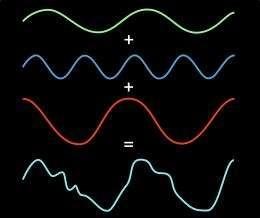
The step-by-step comparison begins with the primary building blocks of each item — an amino acid and a sound wave — and moves up to the level of a beta sheet nanocomposite (the secondary structure of a protein consisting of repeated hierarchical patterns) and a musical riff (a repeated pattern of notes or chords). The study explains that structural patterns are directly related to the functional properties of lightweight strength in the spider silk and, in the riff, sonic tension that creates an emotional response in the listener.

While likening spider silk to musical composition may appear to be more novelty than breakthrough, the methodology behind it represents a new approach to comparing research findings from disparate scientific fields. Such analogies could help engineers develop materials that make use of the repeating patterns of simple building blocks found in many biological materials that, like spider silk, are lightweight yet extremely failure-resistant. The work also suggests that engineers may be able to gain new insights into biological systems through the study of the structure-function relationships found in music and other art forms.

The MIT researchers — David Spivak, a postdoc in the Department of Mathematics, Associate Professor Markus Buehler of the Department of Civil and Environmental Engineering (CEE) and CEE graduate student Tristan Giesa — published their findings in the December issue of BioNanoScience.

They created the analogy using ontology logs, or “ologs,” a concept introduced about a year ago by Spivak, who specializes in a branch of mathematics called category theory. Ologs provide an abstract means for categorizing the general properties of a system — be it a material, mathematical concept or phenomenon — and showing inherent relationships between function and structure.

To build the ologs, the researchers used information from Buehler’s previous studies of the nanostructure of spider silk and other biological materials.

“There is mounting evidence that similar patterns of material features at the nanoscale, such as clusters of hydrogen bonds or hierarchical structures, govern the behaviour of materials in the natural environment, yet we couldn’t mathematically show the analogy between different materials,” Buehler says. “The olog lets us compile information about how materials function in a mathematically rigorous way and identify those patterns that are universal to a very broad class of materials. Its potential for engineering the built environment — in the design of new materials, structures or infrastructure — is immense.”

“This work is very exciting because it brings forth an approach founded on category theory to bridge music (and potentially other aspects of the fine arts) to a new field of materiomics,” says Associate Professor of Biomedical Engineering Joyce Wong of Boston University, a biomaterials scientist and engineer, as well as a musician. “This approach is particularly appropriate for the hierarchical design of proteins, as they show in the silk example. What is particularly exciting is the opportunity to reveal new relationships between seemingly disparate fields with the aim of improving materials engineering and design.”

At first glance, an olog may look deceptively simple, much like a corporate organizational chart that shows reporting relationships using directional arrows. But ologs demand scientific rigor to break a system down into its most basic structural building blocks, define the functional properties of the building blocks with respect to one another, show how function emerges through the building blocks’ interactions, and do this in a self-consistent manner. With this structure, two or more systems can be formally compared.

“The fact that a spider’s thread is robust enough to avoid catastrophic failure even when a defect is present can be explained by the very distinct material makeup of spider-silk fibers,” Giesa says. “It’s exciting to see that music theoreticians observed the same phenomenon in their field, probably without any knowledge of the concept of damage tolerance in materials. Deleting single chords from a harmonic sequence often has only a minor effect on the harmonic quality of the whole sequence.”

“The seemingly incredible gap between spider silk and music is no wider than the gap between the two disparate mathematical fields of geometry — think of triangles and spheres — and algebra, which uses variables and equations,” Spivak says. “Yet category theory’s first success, in the 1940s, was to express a rigorous mathematical analogy between these two domains and use it to prove new theorems about complex geometric shapes by importing existing theorems from algebra. It remains to be seen whether our olog will yield such striking results; however, the foundation for such an inquiry is now in place.”

For more such insights, log into our website https://international-maths-challenge.com

Credit of the article given to Denise Brehm, Massachusetts Institute of Technology


Danger of Death: Are We Programmed to Miscalculate Risk?

Our best efforts to gauge threats may be counter-productive.

Assessing risk is something everyone must do every day. Yet few are very good at it, and there are significant consequences of the public’s collective inability to accurately assess risk.

As a first and very important example, most people presume, as an indisputable fact, that the past century has been the most violent in all history — two devastating world wars, the Holocaust, the Rawanda massacre, the September 11 attacks and more — and that we live in a highly dangerous time today.

And yet, as Canadian psychologist (now at Harvard) Steven Pinker has exhaustively documented in his new book The Better Angels of Our Nature: Why Violence Has Declined, the opposite is closer to the truth, particularly when normalised by population.

As Pinker himself puts it:

“Believe it or not — and I know most people do not — violence has been in decline over long stretches of time, and we may be living in the most peaceful time in our species’ existence. The decline of violence, to be sure, has not been steady; it has not brought violence down to zero (to put it mildly); and it is not guaranteed to continue.

“But I hope to convince you that it’s a persistent historical development, visible on scales from millennia to years, from the waging of wars and perpetration of genocides to the spanking of children and the treatment of animals.”

How could the public perception be so wrong? The news media is partly to blame — good news doesn’t sell much advertising space. But the problem might go even deeper: we may be psychologically disposed to miscalculate risk, perhaps as an evolutionary response to danger.

One well-known problem is the “conjunction fallacy” — the common predilection to assign greater probability to a more specialised risk.

One indication of our inability to objectively assess risk is the fanatical and often counter-productive measures taken by parents nowadays to protect children. Some 42 years years ago, 67% of American children walked or biked to school, but today only 10% do, in part stemming from a handful of highly publicised abduction incidents.

Yet the number of cases of real child abduction by strangers (as opposed to, say, a divorced parent) has dwindled from 200-300 per year in the 1990s to only about 100 per year in the US today.

Even if one assumes all of these children are harmed (which is not true), this is still only about 1/20 the risk of drowning and 1/40 of the risk of a fatal car accident.

Such considerations many not diminish the tragedy of an individual loss, but they do raise questions of priority in prevention. Governments worldwide often agonise over marginal levels of additives in certain products (agar in apples in the 1980s and asbestos insulation in well-protected ceilings), while refusing to spend money or legislate for clear social good (smoking in the developing world, gun control, infectious disease control, needle exchange programs and working conditions in coal mines).

One completely absurd example is the recent surge of opposition in the U.S. (supposedly on health concerns) to “smart meters,” which once an hour send usage statistics to the local electric or natural gas utility.

The microwave exposure for these meters, even if you are standing just two feet from a smart meter when it broadcasts its data, is 550 times less than standing in front of an active microwave oven, up to 4,600 times less than holding a walkie-talkie at your ear, and up to 1,100 times less than holding an active cell phone at your ear.

It is even less than sitting in a WiFi cyber cafe using a laptop computer.

A much more serious example is the ongoing hysteria, especially in the UK and the US, over childhood vaccinations. Back in 1998, a study was published in the British medical journal Lancet claiming that vaccination shots with a certain mercury compound may be linked to autism, but other studies showed no such link.

In the meantime, many jumped on the anti-vaccination bandwagon, and several childhood diseases began to reappear, including measles in England and Wales, and whooping cough in California. We should note the rate of autism is probably increasing.

Finally, in January 2011, Lancet formally acknowledged that the original study was not only bad science (which had been recognised for years), but further an “elaborate fraud”.

Yet nearly one year later, opposition to vaccination remains strong, and irresponsible politicians such as would-be-US-President Michele Bachmann cynically (or ignorantly?) milk it.

A related example is the worldwide reaction to the Fukushima reactor accident. This was truly a horrible incident, and we do not wish to detract from death and environmental devastation that occurred. But we question decisions such as that quickly made by Germany to discontinue and dismantle its nuclear program.

Was this decision made after a sober calculation of relative risk, or simply from populist political pressure? We note this decision inevitably will mean more consumption of fossil fuels, as well as the importation of electricity from France, which is 80% nuclear.

Is this a step forward, or a step backward? We also note that concern about global warming is, if anything, more acute than ever in light of accelerating carbon consumption.

This kind of over-reaction — to which many of us are prey — is exacerbated by cynical and exploitive individuals, such as Bill and Michelle Deagle and Jeff Rense, who profit from such fears by peddling bogus medical products, speaking at conspiracy conventions for hefty fees, and charging for elite information.

This is just one instance of a large, growing and dangerous co-evolution of creationist, climate-denial and other anti-science movements.

How do we protect against such misinformation and misperceptions? The complete answers are complex but several things are clear.

First of all, science education must be augmented to address the assessment of risk — this should be a standard part of high school mathematics, as should be more attention to the information needed to make informed assessment.

Second, the press needs to be significantly more vigilant in critically commenting on dubious claims of public risk by citing literature, consulting real experts, and so on. Ideally, we should anticipate scientifically trained and certified scientific journalists.

Third, mathematicians and scientists themselves need to recognise their responsibility to help the public understand risk. Failure to do so, well, poses a serious risk to society.

For more such insights, log into www.international-maths-challenge.com.

*Credit for article given to Jonathan Borwein (Jon)*


Heads up Kobe Bryant! Research shows that trying for another 3-pointer is a mistake

Basketball fans everywhere recognize the following scenario: Their favourite player scores a three-point shot. A short time later he regains control of the ball. But does the fact that he scored the last time make him more likely to try another three-pointer? Does it change the probability that he will score again?

New research by Dr. Yonatan Loewenstein and graduate student Tal Neiman at the Hebrew University in Jerusalem shatters the myth that a player who scores one or more three-pointers improves his odds of scoring another.

Dr. Loewenstein is at the Edmond and Lily Safra Center for Brain Sciences and the Department of Neurobiology at the Hebrew University.

Appearing in the latest issue of the journal Nature Communications, the report raises doubts about the ability of athletes in particular, and people in general, to predict future success based on past performance.

Loewenstein and Neiman examined more than 200,000 attempted shots from 291 leading players in the National Basketball Association (NBA) in the 2007-2008 and 2008-2009 regular seasons, and more than 15,000 attempted shots by 41 leading players in the Women’s National Basketball Association (WNBA) during the 2008 and 2009 regular seasons.

The researchers studied how scores or misses affected a player’s behaviour later in the game, and found that after a successful three-pointer, players were significantly more likely to attempt another three-pointer.

In other words, a successful three point shot provided players with positive reinforcement to attempt additional three point shots later in the game.

Surprisingly, the researchers discovered the exact opposite of what players and fans tend to believe: players who scored a three-pointer and then attempted another three-pointer were more likely to miss the follow-up shot.

On the other hand, players who missed a previous three-pointer were more likely to score with their next attempt.

According to Dr. Loewenstein, “The study shows that despite many years of intense training, even the best basketball players over-generalize from their most recent actions and their outcomes. They assume that even one shot is indicative of future performance, while not taking into account that the situation in which they previously scored is likely to be different than the current one.”

The behaviour of basketball players shows the limitations of learning from reinforcement, especially in a complex environment such as a basketball game.

“Learning from reinforcement may not improve performance, and may even damage it, if it is not based on an accurate model of the world,” explains Dr. Loewenstein. “This affects everyone’s behaviour: brokers make investments according to past market performance and commanders make military moves based on the results of past battles. Awareness of the limitations of this kind of learning can help them improve their decision-making processes — as well as those of basketball players.”

For more such insights, log into our website https://international-maths-challenge.com

Credit of the article given to Hebrew University of Jerusalem


Researchers find best routes to self-assembling 3-D shapes

This showas a few of the 2.3 million possible 2-D designs — planar nets — for a truncated octahedron (right column). The question is: Which net is best to make a self-assembling shape at the nanoscale?

Material chemists and engineers would love to figure out how to create self-assembling shells, containers or structures that could be used as tiny drug-carrying containers or to build 3-D sensors and electronic devices.

There have been some successes with simple 3-D shapes such as cubes, but the list of possible starting points that could yield the ideal self-assembly for more complex geometric configurations gets long fast. For example, while there are 11 2-D arrangements for a cube, there are 43,380 for a dodecahedron (12 equal pentagonal faces). Creating a truncated octahedron (14 total faces – six squares and eight hexagons) has 2.3 million possibilities.

“The issue is that one runs into a combinatorial explosion,” said Govind Menon, associate professor of applied mathematics at Brown University. “How do we search efficiently for the best solution within such a large dataset? This is where math can contribute to the problem.”

In a paper published in the Proceedings of National Academy of Sciences, researchers from Brown and Johns Hopkins University determined the best 2-D arrangements, called planar nets, to create self-folding polyhedra with dimensions of a few hundred microns, the size of a small dust particle. The strength of the analysis lies in the combination of theory and experiment. The team at Brown devised algorithms to cut through the myriad possibilities and identify the best planar nets to yield the self-folding 3-D structures. Researchers at Johns Hopkins then confirmed the nets’ design principles with experiments.

“Using a combination of theory and experiments, we uncovered design principles for optimum nets which self-assemble with high yields,” said David Gracias, associate professor in of chemical and biomolecular engineering at Johns Hopkins and a co-corresponding author on the paper. “In doing so, we uncovered striking geometric analogies between natural assembly of proteins and viruses and these polyhedra, which could provide insight into naturally occurring self-assembling processes and is a step toward the development of self-assembly as a viable manufacturing paradigm.”

“This is about creating basic tools in nanotechnology,” said Menon, co-corresponding author on the paper. “It’s important to explore what shapes you can build. The bigger your toolbox, the better off you are.”

While the approach has been used elsewhere to create smaller particles at the nanoscale, the researchers at Brown and Johns Hopkins used larger sizes to better understand the principles that govern self-folding polyhedra.

The researchers sought to figure out how to self-assemble structures that resemble the protein shells viruses use to protect their genetic material. As it turns out, the shells used by many viruses are shaped like dodecahedra (a simplified version of a geodesic dome like the Epcot Center at Disney World). But even a dodecahedron can be cut into 43,380 planar nets. The trick is to find the nets that yield the best self-assembly. Menon, with the help of Brown undergraduate students Margaret Ewing and Andrew “Drew” Kunas, sought to winnow the possibilities. The group built models and developed a computer code to seek out the optimal nets, finding just six that seemed to fit the algorithmic bill.

The students got acquainted with their assignment by playing with a set of children’s toys in various geometric shapes. They progressed quickly into more serious analysis. “We started randomly generating nets, trying to get all of them. It was like going fishing in a lake and trying to count all the species of fish,” said Kunas, whose concentration is in applied mathematics. After tabulating the nets and establishing metrics for the most successful folding maneuvers, “we got lists of nets with the best radius of gyration and vertex connections, discovering which nets would be the best for production for the icosahedron, dodecahedron, and truncated octahedron for the first time.”

Gracias and colleagues at Johns Hopkins, who have been working with self-assembling structures for years, tested the configurations from the Brown researchers. The nets are nickel plates with hinges that have been soldered together in various 2-D arrangements. Using the options presented by the Brown researchers, the Johns Hopkins’s group heated the nets to around 360 degrees Fahrenheit, the point at which surface tension between the solder and the nickel plate causes the hinges to fold upward, rotate and eventually form a polyhedron. “Quite remarkably, just on heating, these planar nets fold up and seal themselves into these complex 3-D geometries with specific fold angles,” Gracias said.

“What’s amazing is we have no control over the sequence of folds, but it still works,” Menon added.

For more such insights, log into our website https://international-maths-challenge.com

Credit of the article given to Karolina Grabowska/Pexels,