How the 18th-century ‘probability revolution’ fueled the casino gambling craze

The first commercial gambling operations emerged, coincidentally or not, at the same time as the study of mathematical probability in the mid-1600s.

By the early 1700s, commercial gambling operations were widespread in European cities such as London and Paris. But in many of the games that were offered, players faced steep odds.

Then, in 1713, the brothers Johann and Jacob Bernoulli proved their “Golden Theorem,” known now as the law of large numbers or long averages.

But gambling entrepreneurs were slow to embrace this theorem, which showed how it could actually be an advantage for the house to have a smaller edge over a larger one.

The book “The Gambling Century: Commercial Gaming in Britain from Restoration to Regency,” WEexplain how it took government efforts to ban and regulate betting for gambling operators to finally understand just how much money could be made off a miniscule house edge.

The illusion of even odds in games that were the ancestors of roulette and blackjack proved immensely profitable, sparking a “probability revolution” that transformed gambling in Britain and beyond.

A new theorem points to sneaky big profits

The law of large numbers refers to events governed by chance.

When you flip a coin, for example, you have a 50% – or “even money” – chance of getting heads or tails. Were you to flip a coin 10 times, it’s quite possible that heads will turn up seven times and tails three times. But after 100, or 1000, or 10,000 flips, the ratio of “heads” to “tails” will be closer and closer to the mathematical “mean of probability” – that is, half heads and half tails.

Mathematicians Johann and Jacob Bernoulli developed what’s known today as the law of large numbers. Oxford Science Archive/Print Collector via Getty Images

This principle was popularized by writers such as Abraham De Moivre, who applied them to games of chance.

De Moivre explained how, over time, someone with even the smallest statistical “edge” would eventually win almost all of the money that was staked.

This is what happens in roulette. The game has 36 numbers, 18 of which are red and 18 of which are black. However, there are also two green house numbers – “0” and “00” – which, if the ball lands on them, means that the house can take everyone’s wager. This gives the house a small edge.

Imagine 10 players with $100 apiece. Half of them bet $10 on red and the other half bet $10 on black. Assuming that the wheel strictly aligns with the mean of probability, the house will break even for 18 of 19 spins. But on the 19th spin, the ball will land on one of the green “house numbers,” allowing the house to collect all the money staked from all bettors.

After 100 spins, the house will have won half of the players’ money. After 200 spins, they’ll have won all of it.

Even with a single house number – the single 0 on the roulette wheels introduced in Monte Carlo by the casino entrepreneur Louis Blanc – the house would win everything after 400 spins.

This eventuality, as De Moivre put it, “will seem almost incredible given the smallness of the odds.”

Hesitating to test the math

As De Moivre anticipated, gamblers and gambling operators were slow to adopt these findings.

De Moivre’s complex mathematical equations were over the heads of gamblers who hadn’t mastered simple arithmetic.

Gambling operators didn’t initially buy into the Golden Theorem, either, seeing it as unproven and therefore risky.

Instead, they played it safe by promoting games with long odds.

One was the Royal Oak Lottery, a game played with a polyhedral die with 32 faces, like a soccer ball. Players could bet on individual numbers or combinations of two or four numbers, giving them, at best, 7-to-1 odds of winning.

Faro was another popular game of chance in which the house, or “bank” as it was then known, gave players the opportunity to defer collecting their winnings for chances at larger payouts at increasingly steep odds.

Faro was a popular game of chance in which players could delay collecting their winnings for the chance to win even bigger sums. Boston Public Library

These games – and others played against a bank – were highly profitable to gambling entrepreneurs, who operated out of taverns, coffeehouses and other similar venues. “Keeping a common gaming house” was illegal, but with the law riddled with loopholes, enforcement was lax and uneven.

Public outcry against the Royal Oak Lottery was such that the Lottery Act of 1699 banned it. A series of laws enacted in the 1730s and 1740s classified faro and other games as illegal lotteries, on the grounds that the odds of winning or losing were not readily apparent to players.

The law of averages put into practice

Early writers on probability had asserted that the “house advantage” did not have to be very large for a gambling operation to profit enormously. The government’s effort to ban games of chance now obliged gaming operators to put the law of long averages into practice.

Further statutes outlawed games of chance played with dice, cards, wheels or any other device featuring “numbers or figures.”

None of these measures deterred gambling operators from the pursuit of profit.

Since this language did not explicitly include letters, the game of EO, standing for “even odd,” was introduced in the mid 1740s, after the last of these gambling statutes was enacted. It was played on a wheel with 40 slots, all but two of which were marked either “E” or “O.” As in roulette, an ivory ball was rolled along the edge of the wheel as it was spun. If the ball landed in one of the two blank “bar holes,” the house would automatically win, similar to the “0” and “00” in roulette.

EO’s defenders could argue that it was not an unlawful lottery because the odds of winning or losing were now readily apparent to players and appeared to be virtually equal. The key, of course, is that the bar holes ensured they weren’t truly equal.

Although this logic might not stand up in court, overburdened law enforcement was happy for a reason to look the other way. EO proliferated; legislation to outlaw it was proposed in 1782 but failed.

In the 19th century, roulette became a big draw at Monte Carlo’s casinos.Hulton Archive/Getty Images

The allure of ‘even money’

Gambling operators may have even realized that evening the odds drew more players, who, in turn, staked more.

After EO appeared in Britain, gambling operations both there and on the continent of Europe introduced “even money” betting options into both new and established games.

For example, the game of biribi, which was popular in France throughout the 18th century, involved players betting on numbers from 1 to 72, which were shown on a betting cloth. Numbered beads would then be drawn from a bag to determine the win.

In one iteration from around 1720, players could bet on individual numbers, on vertical columns of six numbers, or other options that promised large payouts against steeper odds.

By the end of the 18th century, however, one biribi cloth featured even money options: Players could bet on any number between 36 and 70 being drawn, or on any number between 1 and 35. Players could also select red or black numbers, making it a likely inspiration for roulette.

In Britain, the Victorian ethos of morality and respectabilityeventually won out. Parliament outlawed games of chance played for money in public or private in 1845, restrictions that were not lifted until 1960.

By 1845, however, British gamblers could travel by steamship and train to one of the many European resorts cropping up across the continent, where the probability revolution had transformed casino gambling into the formidable business enterprise it is today.

For more such insights, log into our website https://international-maths-challenge.com

Credit of the article given to The Conversation


Australian teenagers are curious but have some of the most disruptive maths classes in the OECD

Australian teenagers have more disruptive maths classrooms and experience bullying at greater levels than the OECD average, a new report shows.

But in better news, Australian students report high levels of curiosity, which is important for both enjoyment and achievement at school.

The report, by the Australian Council for Educational Research (ACER) analysed questionnaire responses from more than 13,430 Australian students and 743 principals, to understand how their school experiences impact on maths performance.

What is the research?

This is the second report exploring Australian data from the 2022 Programme for International Student Assessment (PISA).

Australian teenagers have more disruptive maths classrooms and experience bullying at greater levels than the OECD average, a new report shows.

But in better news, Australian students report high levels of curiosity, which is important for both enjoyment and achievement at school.

The report, by the Australian Council for Educational Research (ACER) analysed questionnaire responses from more than 13,430 Australian students and 743 principals, to understand how their school experiences impact on maths performance.


What is the research?

This is the second report exploring Australian data from the 2022 Programme for International Student Assessment (PISA).

Author provided (no reuse)

The advantage gap

ACER’s first PISA 2022 report showed students from disadvantaged socioeconomic backgrounds were six times more likely to be low performers in maths than advantaged students.

It also showed the achievement gap between these two groups had grown by 19 points (or about one year of learning) since 2018.

This second report provides more insight into the challenges faced by disadvantaged students.

It shows a greater proportion of this group report learning in a less favourable disciplinary climate, experience lower levels of teacher support and feel less safe at school than their more advantaged peers.

Girls are more worried than boys

In last year’s report, the mean score for maths performance across OECD countries was nine points lower for girls than it was for boys. In Australia, the difference was 12 points.

The new report also showed differences in wellbeing. In 2022, a greater number of girls reported they panicked easily (58% compared to 23% of boys), got nervous easily (71% compared to 39%) and felt nervous about approaching exams (75% compared 49%).

Almost double the percentage of girls reported feeling anxious when they didn’t have their “digital device” near them (20% compared to 11%). Whether this was a phone, tablet or computer was not specified.

Overall, students who reported feeling anxious when they did not have their device near them scored 37 points lower on the maths test than those who reported never feeling this way or feeling it “half the time”.

Author provided (no reuse)

Curiosity a strong marker for performance

Curiosity was measured for the first time in PISA 2022. This included student behaviours such as asking questions, developing hypotheses, knowing how things work, learning new things and boredom.

Students in Singapore, the highest performing country in PISA 2022, showed the greatest levels of curiosity, followed by Korea and Canada. These were the only comparison countries to have a significantly higher curiosity score than Australia, with the Netherlands showing the lowest curiosity score overall.

As ACER researchers note: “curiosity is associated with greater psychological wellbeing” and “leads to more enjoyment and participation in school and higher academic achievement”.

They found Australia’s foreign-born students reported being more curious than Australian-born students, with 74% compared to 66% reporting that they liked learning new things.

What next?

Their findings highlight concerns for Australian education, such as persistently poor outcomes for disadvantaged students and higher stress levels experienced by girls. We need to better understand why this is happening.

But they also identify behaviours and conditions – such as high levels of curiosity – that contribute to a good maths performance and can be used by schools and policymakers to plan for better outcomes.

For more such insights, log into our website https://international-maths-challenge.com

Credit of the article given to The Conversation


The case for ‘math-ish’ thinking

For everyone whose relationship with mathematics is distant or broken, Jo Boaler, a professor at Stanford Graduate School of Education (GSE), has ideas for repairing it. She particularly wants young people to feel comfortable with numbers from the start—to approach the subject with playfulness and curiosity, not anxiety or dread.

“Most people have only ever experienced what WEcall narrow mathematics—a set of procedures they need to follow, at speed,” Boaler says. “Mathematics should be flexible, conceptual, a place where we play with ideas and make connections. If we open it up and invite more creativity, more diverse thinking, we can completely transform the experience.”

Boaler, the Nomellini and Olivier Professor of Education at the GSE, is the co-founder and faculty director of Youcubed, a Stanford research center that provides resources for math learning that has reached more than 230 million students in over 140 countries. In 2013 Boaler, a former high school math teacher, produced How to Learn Math, the first massive open online course (MOOC) on mathematics education. She leads workshops and leadership summits for teachers and administrators, and her online courses have been taken by over a million users.

In her new book, “Math-ish: Finding Creativity, Diversity, and Meaning in Mathematics,” Boaler argues for a broad, inclusive approach to math education, offering strategies and activities for learners at any age. We spoke with her about why creativity is an important part of mathematics, the impact of representing numbers visually and physically, and how what she calls “ishing” a math problem can help students make better sense of the answer.

What do you mean by ‘math-ish’ thinking?

It’s a way of thinking about numbers in the real world, which are usually imprecise estimates. If someone asks how old you are, how warm it is outside, how long it takes to drive to the airport—these are generally answered with what WEcall “ish” numbers, and that’s very different from the way we use and learn numbers in school.

In the book WEshare an example of a multiple-choice question from a nationwide exam where students are asked to estimate the sum of two fractions: 12/13 + 7/8. They’re given four choices for the closest answer: 1, 2, 19, or 21. Each of the fractions in the question is very close to 1, so the answer would be 2—but the most common answer 13-year-olds gave was 19. The second most common was 21.

I’m not surprised, because when students learn fractions, they often don’t learn to think conceptually or to consider the relationship between the numerator or denominator. They learn rules about creating common denominators and adding or subtracting the numerators, without making sense of the fraction as a whole. But stepping back and judging whether a calculation is reasonable might be the most valuable mathematical skill a person can develop.

But don’t you also risk sending the message that mathematical precision isn’t important?

I’m not saying precision isn’t important. What I’m suggesting is that we ask students to estimate before they calculate, so when they come up with a precise answer, they’ll have a real sense for whether it makes sense. This also helps students learn how to move between big-picture and focused thinking, which are two different but equally important modes of reasoning.

Some people ask me, “Isn’t ‘ishing’ just estimating?” It is, but when we ask students to estimate, they often groan, thinking it’s yet another mathematical method. But when we ask them to “ish” a number, they’re more willing to offer their thinking.

Ishing helps students develop a sense for numbers and shapes. It can help soften the sharp edges in mathematics, making it easier for kids to jump in and engage. It can buffer students against the dangers of perfectionism, which we know can be a damaging mindset. WEthink we all need a little more ish in our lives.

You also argue that mathematics should be taught in more visual ways. What do you mean by that?

For most people, mathematics is an almost entirely symbolic, numerical experience. Any visuals are usually sterile images in a textbook, showing bisecting angles, or circles divided into slices. But the way we function in life is by developing models of things in our minds. Take a stapler: Knowing what it looks like, what it feels and sounds like, how to interact with it, how it changes things—all of that contributes to our understanding of how it works.

There’s an activity we do with middle-school students where we show them an image of a 4 x 4 x 4 cm cube made up of smaller 1 cm cubes, like a Rubik’s Cube. The larger cube is dipped into a can of blue paint, and we ask the students, if they could take apart the little cubes, how many sides would be painted blue? Sometimes we give the students sugar cubes and have them physically build a larger 4 x 4 x 4 cube. This is an activity that leads into algebraic thinking.

Some years back we were interviewing students a year after they’d done that activity in our summer camp and asked what had stayed with them. One student said, “I’m in geometry class now, and We still remember that sugar cube, what it looked like and felt like.” His class had been asked to estimate the volume of their shoes, and he said he’d imagined his shoes filled with 1 cm sugar cubes in order to solve that question. He had built a mental model of a cube.

When we learn about cubes, most of us don’t get to see and manipulate them. When we learn about square roots, we don’t take squares and look at their diagonals. We just manipulate numbers.


WEwonder if people consider the physical representations more appropriate for younger kids.

That’s the thing—elementary school teachers are amazing at giving kids those experiences, but it dies out in middle school, and by high school it’s all symbolic. There’s a myth that there’s a hierarchy of sophistication where you start out with visual and physical representations and then build up to the symbolic. But so much of high-level mathematical work now is visual. Here in Silicon Valley, if you look at Tesla engineers, they’re drawing, they’re sketching, they’re building models, and nobody says that’s elementary mathematics.

There’s an example in the book where you’ve asked students how they would calculate 38 x 5 in their heads, and they come up with several different ways of arriving at the same answer. The creativity is fascinating, but wouldn’t it be easier to teach students one standard method?

That narrow, rigid version of mathematics where there’s only one right approach is what most students experience, and it’s a big part of why people have such math trauma. It keeps them from realizing the full range and power of mathematics. When you only have students blindly memorizing math facts, they’re not developing number sense.

They don’t learn how to use numbers flexibly in different situations. It also makes students who think differently believe there’s something wrong with them.

For more such insights, log into our website https://international-maths-challenge.com

Credit of the article given to Stanford University


Incredible Maths Proof Is So Complex That Almost No One Can Explain It

Mathematicians are celebrating a 1000-page proof of the geometric Langlands conjecture, a problem so complicated that even other mathematicians struggle to understand it. Despite that, it is hoped the proof can provide key insights across maths and physics.

The Langlands programme aims to link different areas of mathematics

Mathematicians have proved a key building block of the Langlands programme, sometimes referred to as a “grand unified theory” of maths due to the deep links it proposes between seemingly distant disciplines within the field.

While the proof is the culmination of decades of work by dozens of mathematicians and is being hailed as a dazzling achievement, it is also so obscure and complex that it is “impossible to explain the significance of the result to non-mathematicians”, says Vladimir Drinfeld at the University of Chicago. “To tell the truth, explaining this to mathematicians is also very hard, almost impossible.”

The programme has its origins in a 1967 letter from Robert Langlands to fellow mathematician Andre Weil that proposed the radical idea that two apparently distinct areas of mathematics, number theory and harmonic analysis, were in fact deeply linked. But Langlands couldn’t actually prove this, and was unsure whether he was right. “If you are willing to read it as pure speculation I would appreciate that,” wrote Langlands. “If not — I am sure you have a waste basket handy.”

This mysterious link promised answers to problems that mathematicians were struggling with, says Edward Frenkel at the University of California, Berkeley. “Langlands had an insight that difficult questions in number theory could be formulated as more tractable questions in harmonic analysis,” he says.

In other words, translating a problem from one area of maths to another, via Langlands’s proposed connections, could provide real breakthroughs. Such translation has a long history in maths – for example, Pythagoras’s theorem relating the three sides of a triangle can be proved using geometry, by looking at shapes, or with algebra, by manipulating equations.

As such, proving Langlands’s proposed connections has become the goal for multiple generations of researchers and led to countless discoveries, including the mathematical toolkit used by Andrew Wiles to prove the infamous Fermat’s last theorem. It has also inspired mathematicians to look elsewhere for analogous links that might help. “A lot of people would love to understand the original formulation of the Langlands programme, but it’s hard and we still don’t know how to do it,” says Frenkel.

One analogy that has yielded progress is reformulating Langlands’s idea into one written in the mathematics of geometry, called the geometric Langlands conjecture. However, even this reformulation has baffled mathematicians for decades and was itself considered fiendishly difficult to prove.

Now, Sam Raskin at Yale University and his colleagues claim to have proved the conjecture in a series of five papers that total more than 1000 pages. “It’s really a tremendous amount of work,” says Frenkel.

The conjecture concerns objects that are similar to those in one half of the original Langlands programme, harmonic analysis, which describes how complex structures can be mathematically broken down into their component parts, like picking individual instruments out of an orchestra. But instead of looking at these with harmonic analysis, it uses other mathematical ideas, such as sheaves and moduli stacks, that describe concepts relating to shapes like spheres and doughnuts.

While it wasn’t in the setting that Langlands originally envisioned, it is a sign that his original hunch was correct, says Raskin. “Something I find exciting about the work is it’s a kind of validation of the Langlands programme more broadly.”

“It’s the first time we have a really complete understanding of one corner of the Langlands programme, and that’s inspiring,” says David Ben-Zvi at the University of Texas, who wasn’t involved in the work. “That kind of gives you confidence that we understand what its main issues are. There are a lot of subtleties and bells and whistles and complications that appear, and this is the first place where they’ve all been kind of systematically resolved.”

Proving this conjecture will give confidence to other mathematicians hoping to make inroads on the original Langlands programme, says Ben-Zvi, but it might also attract the attention of theoretical physicists, he says. This is because in 2007, physicists Edward Witten and Anton Kapustin found that the geometric Langlands conjecture appeared to describe an apparent symmetry between certain physical forces or theories, called S-duality.

The most basic example of this in the real world is in electricity and magnetism, which are mirror images of one another and interchangeable in many scenarios, but S-duality was also used by Witten to famously unite five competing string theory models into a single theory called M-theory.

But before anything like that, there is much more work to be done, including helping other mathematicians to actually understand the proof. “Currently, there’s a very small group of people who can really understand all the details here. But that changes the game, that changes the whole expectation and changes what you think is possible,” says Ben-Zvi.

For more such insights, log into www.international-maths-challenge.com.

*Credit for article given to Alex Wilkins*


A mathematical understanding of project schedules

Complex projects are made up of many activities, the duration of which vary according to a power law; this model can be used to predict overall project duration and delay.

We have all been frustrated when a project is delayed because one sub-task cannot begin before another ends. It is less well known that the process of scheduling projects efficiently can be described in mathematical terms.

Now, Alexei Vazquez, of technology company Nodes & Links and based in Cambridge, U.K., has shown that the distribution of activity lengths in a project follows the mathematical relationship of power law scaling. He has published his findings in The European Physical Journal B.

Any relationship in which one quantity varies as a power of another (such as squared or cubed) is known as a power law. These can be applied to a wide range of physical (e.g., cloud sizes or solar flares), biological (e.g. species frequencies in a habitat) and man-made (e.g. income distribution) phenomena.

In Vazquez’ analysis of projects, the quantities that depend on power laws were the duration of each of the activities that make up the project and the slack times between each activity, or “floats.”

Vazquez analysed data on 118 construction projects, together comprising more than 1,000 activities, that was stored in a database belonging to his company. The activity durations in a given project fitted a power law with a negative exponent (i.e., there were more short-duration activities, and a “tail” of small numbers of longer ones); the value of the exponent varied from project to project. The distribution of float times for the activities in a project can be expressed in a similar but independent power law.

He explained that these power law scalings arise from different processes: in the case of the activities, from a historical process in which a generic activity fragments over time into a number of more specialized ones. Furthermore, he showed that estimation of delays associated with a whole project depends on the power law scaling of the activities but not of the floats. This analysis has the potential to forecast delays in planned projects accurately, minimizing the annoyance caused by those long waits.

For more such insights, log into our website https://international-maths-challenge.com

Credit of the article given to Clare Sansom, SciencePOD


Mechanistic model shows how much gossip is needed to foster social cooperation

Gossip often has a negative connotation, but imagine you are part of a group deciding on a job candidate to hire or a local political candidate to back. Candidates who get a good reputation by helping others may be more likely to receive help in the form of a job offer or endorsement, a feedback loop known as indirect reciprocity. Gossip can facilitate

Previous research has shown that people tend to cooperate more when they think their peers are gossiping about their behaviour, gossipallows people to avoid potential cheaters, and gossip can punish freeloaders. Yet little was understood about how much gossip is required to foster cooperation and how incorrect information impacts the effects of gossip.

Researchers in the Plotkin Research Group in Mathematical Biology in the School of Arts & Sciences studied this issue by creating a model that incorporates two sources of gossip: randomly selected people versus a single source. They show that there is a mathematical relationship between these forms of gossip—meaning that understanding gossip with a single source also allows them to understand gossip with peers—and developed an analytical expression for the amount of gossip required to reach sufficient consensus and sustain cooperation.

Their findings are published in Proceedings of the National Academy of Sciences.

“The study of the spread of social information and the study of the evolution of cooperative behaviour are very mature fields, but there hasn’t been as much work done to combine those,” says first author Mari Kawakatsu, a postdoctoral researcher in the lab of biology professor Joshua B. Plotkin, the paper’s senior author.

“By merging ideas from the two fields, we were able to develop a mechanistic model of how information spread can help cooperative behaviour.”

Co-author Taylor A. Kessinger, also a postdoctoral researcher with a background in physics, says this analysis bridges the critical gap in past work on no gossip, where everyone’s opinion is private and independent, and infinitely fast gossip with total agreement about reputations. Kessinger has also seen the central role that indirect reciprocity plays on X, formerly known as Twitter, and how disagreement about reputations and ingroup-outgroup dynamics can incentivize bad behaviour.

“Systems of morality and reputation help ensure that good actors get rewarded and bad actors get punished. That way, good behaviour spreads and bad behaviour doesn’t,” Kessinger says. “If you punish a bad actor, you need to be sure that other people agree they’re guilty of wrongdoing. Otherwise, they might see you as the bad actor. Gossip can be one way to accomplish this.”

Plotkin says while past work has taken the basic model of indirect reciprocity and added various complications, such as stereotyping, this paper goes back and fills a gap in the theory. The paper provides a quantitative model that explains how many rounds of gossip are sufficient for people to change their cooperative or noncooperative behaviours, he says.

The paper involves a game-theoretical model where an interaction takes the form of a donation game, with each “donor” choosing whether to cooperate with each “recipient” by paying a cost to provide a benefit. All individuals serve once each as donor and recipient. Each then privately assesses the reputation of every donor by assessing their action toward a randomly selected participant, and a period of gossip about reputations follows. Private assessments and gossip continue until reputations equilibrate.

The authors note that behavioural strategies vary. Some always cooperate, some always defect, and some discriminate, meaning they cooperate when the recipient has a good reputation and defect when the recipient has a bad one. The researchers found that both forms of gossip tend to increase agreement about reputations, which in turn improves the equilibrium reputations of discriminators.

So, if gossip runs long enough, discriminators can eventually outcompete cooperators and defectors, which is a good outcome because discriminators are highly cooperative with one another and stable against noncooperative behaviours.

The researchers further found that biased gossip, meaning the spread of false information, can either facilitate or hinder cooperation, depending on the magnitude of gossip and whether the bias is positive or negative. But as gossip becomes more prone to unbiased “noise,” the population must gossip for longer to stabilize the equilibrium.

Kawakatsu next wants to think about how information flow interacts with altruism. The paper also notes that future research could explore how the number of gossip sources impacts cooperation, the conditions that would cause a rift in how an individual is viewed, and how bias may be applied differently for in-group and out-group members.

For more such insights, log into our website https://international-maths-challenge.com

Credit of the article given to University of Pennsylvania


New study is first to use statistical physics to corroborate 1940s social balance theory

Most people have heard the famous phrase “the enemy of my enemy is my friend.” Now, Northwestern University researchers have used statistical physics to confirm the theory that underlies this famous axiom. The study, “Proper network randomization is key to assessing social balance,” is published in the journal Science Advances.

In the 1940s, Austrian psychologist Fritz Heider introduced social balance theory, which explains how humans innately strive to find harmony in their social circles. According to the theory, four rules—an enemy of an enemy is a friend, a friend of a friend is a friend, a friend of an enemy is an enemy and, finally, an enemy of a friend is an enemy—lead to balanced relationships.

Although countless studies have tried to confirm this theory using network science and mathematics, their efforts have fallen short, as networks deviate from perfectly balanced relationships. Hence, the real question is whether social networks are more balanced than expected according to an adequate network model.

Most network models were too simplified to fully capture the complexities within human relationships that affect social balance, yielding inconsistent results on whether deviations observed from the network model expectations are in line with the theory of social balance.

The Northwestern team, however, successfully integrated the two key pieces that make Heider’s social framework work. In real life, not everyone knows each other, and some people are more positive than others. Researchers have long known that each factor influences social ties, but existing models could only account for one factor at a time.

By simultaneously incorporating both constraints, the researchers’ resulting network model finally confirmed the famous theory some 80 years after Heider first proposed it.

The useful new framework could help researchers better understand social dynamics, including political polarization and international relations, as well as any system that comprises a mixture of positive and negative interactions, such as neural networks or drug combinations.

“We have always thought this social intuition works, but we didn’t know why it worked,” said Northwestern’s István Kovács, the study’s senior author.

“All we needed was to figure out the math. If you look through the literature, there are many studies on the theory, but there’s no agreement among them. For decades, we kept getting it wrong. The reason is because real life is complicated. We realized that we needed to take into account both constraints simultaneously: who knows whom and that some people are just friendlier than others.”

“We can finally conclude that social networks align with expectations that were formed 80 years ago,” added Bingjie Hao, the study’s first author. “Our findings also have broad applications for future use. Our mathematics allows us to incorporate constraints on the connections and the preference of different entities in the system. That will be useful for modeling other systems beyond social networks.”

Kovács is an assistant professor of Physics and Astronomy at Northwestern’s Weinberg College of Arts and Sciences. Hao is a postdoctoral researcher in his laboratory.

What is social balance theory?

Using groups of three people, Heider’s social balance theory maintains the assumption that humans strive for comfortable, harmonious relationships.

In balanced relationships, all people like each other. Or, if one person dislikes two people, those two are friends. Imbalanced relationships exist when all three people dislike each other, or one person likes two people who dislike each other, leading to anxiety and tension.

Studying such frustrated systems led to the 2021 Nobel Prize in physics to Italian theoretical physicist Giorgio Parisi, who shared the prize with climate modelers Syukuro Manabe and Klaus Hasselmann.

“It seems very aligned with social intuition,” Kovács said. “You can see how this would lead to extreme polarization, which we do see today in terms of political polarization. If everyone you like also dislikes all the people you don’t like, then that results in two parties that hate each other.”

However, it has been challenging to collect large-scale data where not only friends but also enemies are listed. With the onset of Big Data in the early 2000s, researchers tried to see if such signed data from social networks could confirm Heider’s theory. When generating networks to test Heider’s rules, individual people serve as nodes. The edges connecting nodes represent the relationships among individuals.

If the nodes are not friends, then the edge between them is assigned a negative (or hostile) value. If the nodes are friends, then the edge is marked with a positive (or friendly) value. In previous models, edges were assigned positive or negative values at random, without respecting both constraints. None of those studies accurately captured the realities of social networks.

Finding success in constraints

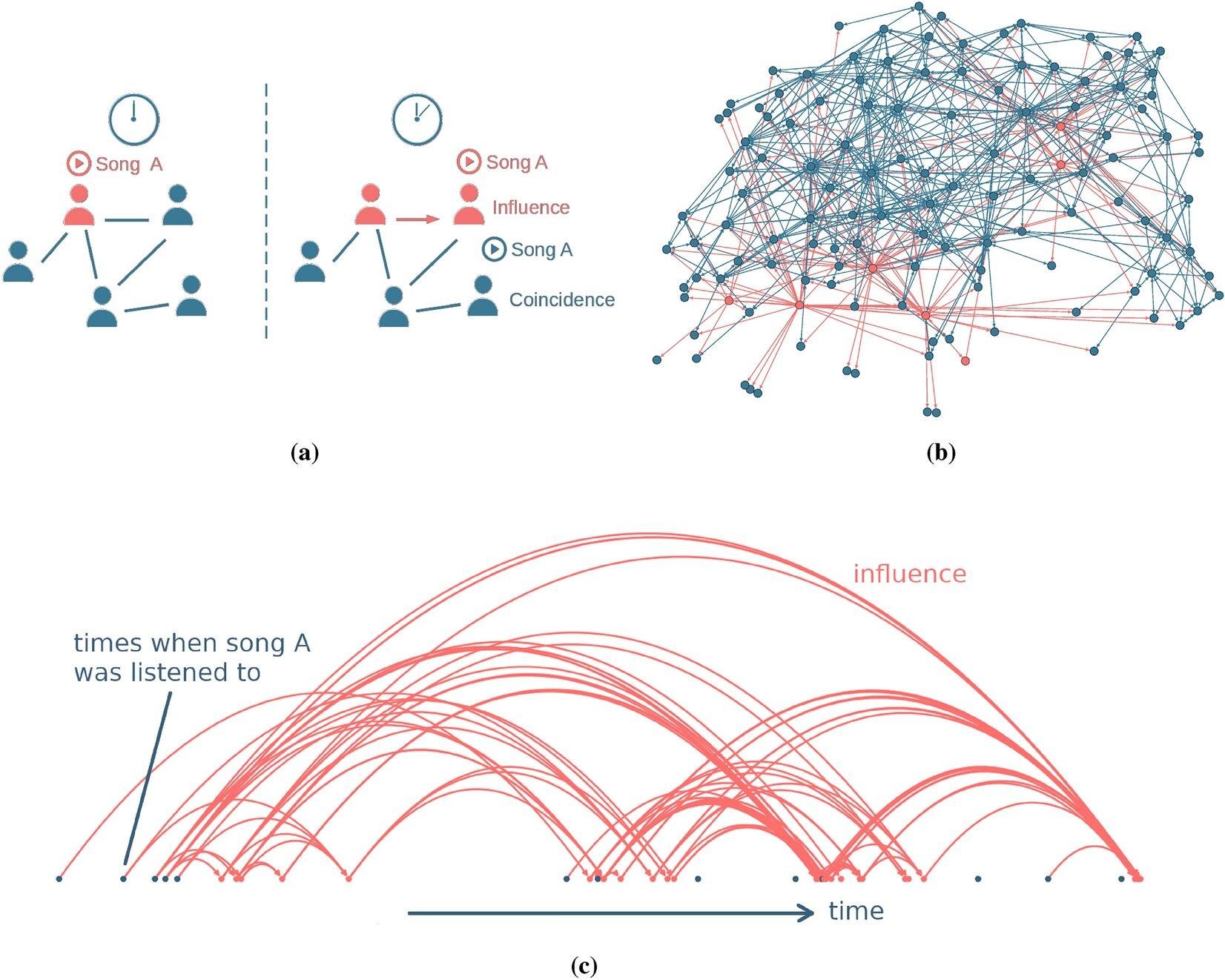
To explore the problem, Kovács and Hao turned to four large-scale, publicly available signed network datasets previously curated by social scientists, including data from 1) user-rated comments on social news site Slashdot; 2) exchanges among Congressional members on the House floor; 3) interactions among Bitcoin traders; and 4) product reviews from consumer review site Epinions.

In their network model, Kovács and Hao did not assign truly random negative or positive values to the edges. For every interaction to be random, every node would need to have an equal chance of encountering one another. In real life, however, not everyone actually knows everyone else within a social network. For example, a person might not ever encounter their friend’s friend, who lives on the other side of the world.

To make their model more realistic, Kovács and Hao distributed positive or negative values based on a statistical model that describes the probability of assigning positive or negative signs to the interactions that exist. That kept the values random—but random within limits given by constraints of the network topology. In addition to who knows whom, the team took into account that some people in life are just friendlier than others. Friendly people are more likely to have more positive—and fewer hostile—interactions.

By introducing these two constraints, the resulting model showed that large-scale social networks consistently align with Heider’s social balance theory. The model also highlighted patterns beyond three nodes. It shows that social balance theory applies to larger graphlets, which involve four and possibly even more nodes.

“We know now that you need to take into account these two constraints,” Kovács said. “Without those, you cannot come up with the right mechanisms. It looks complicated, but it’s actually fairly simple mathematics.”

Insights into polarization and beyond

Kovács and Hao currently are exploring several future directions for this work. In one potential direction, the new model could be used to explore interventions aimed at reducing political polarization. But the researchers say the model could help better understand systems beyond social groups and connections among friends.

“We could look at excitatory and inhibitory connections between neurons in the brain or interactions representing different combinations of drugs to treat disease,” Kovács said. “The social network study was an ideal playground to explore, but our main interest is to go beyond investigating interactions among friends and look at other complex networks.”

For more such insights, log into our website https://international-maths-challenge.com

Credit of the article given to Northwestern University


Malawi’s school kids are using tablets to improve their reading and math skills

Malawi introduced free primary education in 1994. This has significantly improved access to schooling. However, the country—which is one of the poorest in the world—still faces a high learning poverty rate of 87%. Learning poverty is a measure of a child’s inability to meet minimum proficiency in reading, numeracy and other skills at the primary school level. Malawi’s rate means that 87% of children in standard 4, at age 10, are unable to read. Only 19% of children aged between 7 and 14 have foundational reading skills and 13% have foundational numeracy skills. This leads to social and financial dependency. It also limits the extent to which individuals can actively participate in society. Children become especially vulnerable to pernicious social issues such as forced marriage, female genital mutilation, and child labor.

The primary education sector also has many challenges. These include overcrowded classrooms, limited learning materials, and a shortage of trained teachers.

There is a pressing need for innovative, transformative approaches to providing foundational education to meet the goals envisioned in Malawi 2063, the country’s long-term national plan. To accomplish this, the government of Malawi is using scientific evidence to enable meaningful and effective learning happen at scale.

This evidence has been generated in parallel by researchers from the University of Nottingham in the UK and the NGO Imagine Worldwide in the US and Africa. We have been testing the efficacy of an interactive educational technology (EdTech) developed by UK-based non-profit onebillion to raise foundational education by different groups of learners in Malawi.

The EdTech delivers personalized, adaptive software that enables each child to learn reading, writing and numeracy at the right level. Children work on tablets through a carefully structured course made up of thousands of engaging activities, games and stories. Over the past 11 years, we have built a complementary and robust evidence base focusing on different aspects of the software and program.

In 2013, I conducted the first pupil-level randomized control trial at a state primary school in Malawi’s capital city, Lilongwe. Randomized controlled trials are prospective studies that measure the effectiveness of a new intervention compared to standard practice. They are considered the gold standard in effectiveness research. We wanted to test whether the EdTech could raise young children’s numeracy skills. The study showed that after eight weeks of using the EdTech for 30 minutes a day, learners in grades 1–3 (aged 6 to 9) made significant improvements in basic numeracy compared to standard classroom practice. Teachers were also able to put the EdTech to use with ease.

Now, after many studies, Malawi’s government, in collaboration with Imagine Worldwide, is embedding the EdTech program in all state primary schools nationwide. This will serve 3.8 million children per year in grades 1–4 across all 6,000 state primary schools in Malawi.

Rigorous testing

After our initial 2013 study, we kept testing the EdTech through rigorous studies. Oneshowed that the EdTech program significantly raised foundational numeracy and literacy skills of early grade learners. Our results showed similar learning gains for girls and boys with the EdTech. This equalizes foundational education across gender.

Another study showed that children with special educational needs and disabilities could interact and learn with the EdTech, albeit at a slower pace than mainstream peers.

The EdTech wasn’t just tested in Malawi. We wanted to see if it could address learning poverty in different contexts, thus equalizing all children’s opportunities, no matter where they live.

Research in the UK demonstrated that the same EdTech raised the basic numeracy skills of children in the early years of primary schools compared to standard classroom instruction. It was also found to support numeracy acquisition by developmentally young children, including those with Down syndrome.

It was also shown to be effective in a bilingual setting. Brazilian children’s basic numeracy skills improved compared to standard practice after instruction with the EdTech delivered in either English, their language of instruction, or their home language, Brazilian-Portuguese.

Alongside the research from the University of Nottingham, Imagine Worldwide undertook a series of studies in Malawi and other countries to investigate how this EdTech could raise foundational skills over longer periods of time and in different languages and contexts, including refugee camps.

Imagine Worldwide conducted six randomized control trials, including two of the longest over eight months and two years. They showed robust learning gains in literacy and numeracy. They also found that children’s excitement about school, their attendance, and their confidence as learners improved.

The EdTech program also mitigated against learning loss during school closures. During Imagine’s 2-year randomized control trial in Malawi, program delivery was interrupted for seven months by COVID-related closures. Yet, results showed that children who had participated in the EdTech program prior to schools closing returned to school with higher achievement levels than their peers who had received standard instruction only.

Applying the evidence to policy

Malawi’s government was pleased with the early results and the program was expanded to about 150 schools, with the help of UK non-profit Voluntary Service Overseas. A national steering committee was established by Malawi’s government to monitor the program and review additional emerging research. In 2022 the Education Ministry formally launched the program through which the EdTech will be rolled out; it was introduced in 500 new schools at the start of the 2023/2024 school year, in September 2023.

To achieve the promise of the early research, ongoing implementation research and monitoring is helping to ensure program quality and impacts are sustained as it rolls out nationwide.

Strong evidence

Basic literacy and numeracy are the keys to unlocking a child’s potential—improving their health, wealth and social outcomes. Our combined research has shown that child-directed EdTech can deliver high-quality education for millions of marginalized children worldwide. The evidence is strong, diverse and replicable. Now governments need to follow the lead of Malawi to abolish learning poverty and make foundational education a reality for all children, everywhere.

For more such insights, log into our website https://international-maths-challenge.com

Credit of the article given to Nicola Pitchford and Dr. Karen Levesque, The Conversation


500-Year-Old Maths Problem Turns Out To Apply To Coffee And Clocks

A centuries-old maths problem asks what shape a circle traces out as it rolls along a line. The answer, dubbed a “cycloid”, turns out to have applications in a variety of scientific fields.

Light reflecting off the round rim creates a mathematically significant shape in this coffee cup

Sarah Hart

The artist Paul Klee famously described drawing as “taking a line for a walk” – but why stop there? Mathematicians have been wondering for five centuries what happens when you take circles and other curves for a walk. Let me tell you about this fascinating story…

A wheel rolling along a road will trace out a series of arches

Imagine a wheel rolling along a road – or, more mathematically, a circle rolling along a line. If you follow the path of a point on that circle, it traces out a series of arches. What exactly is their shape? The first person to give the question serious thought seems to have been Galileo Galilei, who gave the arch-like curve a name – the cycloid. He was fascinated by cycloids, and part of their intriguing mystery was that it seemed impossible to answer the most basic questions we ask about a curve – how long is it and what area does it contain? In this case, what’s the area between the straight line and the arch? Galileo even constructed a cycloid on a sheet of metal, so he could weigh it to get an estimate of the area, but he never managed to solve the problem mathematically.

Within a few years, it seemed like every mathematician in Europe was obsessed with the cycloid. Pierre de Fermat, René Descartes, Marin Mersenne, Isaac Newton and Gottfried Wilhelm Leibniz all studied it. It even brought Blaise Pascal back to mathematics, after he had sworn off it in favour of theology. One night, he had a terrible toothache and, to distract himself from the pain, decided to think about cycloids. It worked – the toothache miraculously disappeared, and naturally Pascal concluded that God must approve of him doing mathematics. He never gave it up again. The statue of Pascal in the Louvre Museum in Paris even shows him with a diagram of a cycloid. The curve became so well known, in fact, that it made its way into several classic works of literature – it gets name-checked in Gulliver’s TravelsTristram Shandy and Moby-Dick.

The question of the cycloid’s area was first solved in the mid-17th century by Gilles de Roberval, and the answer turned out to be delightfully simple – exactly three times the area of the rolling circle. The first person to determine the length of the cycloid was Christopher Wren, who was an extremely good mathematician, though I hear he also dabbled in architecture. It’s another beautifully simple formula: the length is exactly four times the diameter of the generating circle. The beguiling cycloid was so appealing to mathematicians that it was nicknamed “the Helen of Geometry”.

But its beauty wasn’t the only reason for the name. It was responsible for many bitter arguments. When mathematician Evangelista Torricelli independently found the area under the cycloid, Roberval accused him of stealing his work. “Team Roberval” even claimed that Torricelli had died of shame after being unmasked as a plagiarist (though the typhoid he had at the time may have been a contributing factor). Descartes dismissed Fermat’s work on the cycloid as “ridiculous gibberish”. And in response to a challenge from Johann Bernoulli, Isaac Newton grumpily complained about being “teased by foreigners about mathematics”.

An amazing property of the cycloid was discovered by Christiaan Huygens, who designed the first pendulum clock. Pendulums are good for timekeeping because the period of their motion – the time taken for one full swing of the pendulum – is constant, no matter what the angle of release. But in fact, that’s only approximately true – the period does vary slightly. Huygens wondered if he could do better. The end of a pendulum string moves along the arc of a circle, but is there a curved path it could follow so that the bob would reach the bottom of the curve in the same time no matter where it was released? This became known as the “tautochrone problem”. And guess which curve is the solution? An added bonus is its link to the “brachistochrone problem” of finding the curve between any two points along which a particle moving under gravity will descend in the shortest time. There’s no reason at all to think that the same curve could answer both problems, but it does. The solution is the cycloid. It’s a delightful surprise to find it cropping up in situations seemingly so unrelated to where we first encountered it.

When you roll a circle along a line, you get a cycloid. But what happens when you roll a line along a circle? This is an instance of a curve called an involute. To make one, you take a point at the end of a line segment and roll that line along the curve so it’s always just touching it (in other words, it’s a tangent). The involute is the curve traced out by that point. For the involute of a circle, imagine unspooling a thread from a cotton reel and following the end of the thread as it moves. The result is a spiralling curve emerging from the circle’s circumference.

When a line rolls along a circle, it produces a curve called an involute

Huygens was the first person to ask about involutes, as part of his attempts to make more accurate clocks. It’s all very well knowing the cycloid is the perfect tautochrone, but how do you get your string to follow a cycloidal path? You need to find a curve whose involute is a cycloid. The miraculous cycloid, it turns out, has the beautiful property that it is its own involute! But those lovely spiralling circle involutes turn out to be extremely useful too.

A circle with many involutes

My favourite application is one Huygens definitely couldn’t have predicted: in the design of a nuclear reactor that produces high-mass elements for scientific research. This is done by smashing neutrons at high speed into lighter elements, to create heavier ones. Within the cylindrical reactor cores, the uranium oxide fuel is sandwiched in thin layers between strips of aluminium, which are then curved to fit into the cylindrical shape. The heat produced by a quadrillion neutrons hurtling around every square centimetre is considerable, so coolant runs between these strips. It’s vital that they must be a constant distance apart all the way along their curved surfaces, to prevent hotspots. That’s where a useful property of circle involutes comes in. If you draw a set of circle involutes starting at equally spaced points on the circumference of a circle, then the distances between them remain constant along the whole of each curve. So, they are the perfect choice for the fuel strips in the reactor core. What’s more, the circle involute is the only curve for which this is true! I just love that a curve first studied in the context of pendulum clocks turns out to solve a key design question for nuclear reactors.

We’ve rolled circles along lines and lines along circles. Clearly the next step is to roll circles along circles. What happens? Here, we have some choices. What size is the rolling circle? And are we rolling along the inside or the outside of the stationary one? The curve made by a circle rolling along inside of the circle is called a hypocycloid; rolling it along the outside gives you an epicycloid. If you’ve ever played with a Spirograph toy, you’ll almost have drawn hypocycloids. Because your pen is not quite at the rim of the rolling circle, technically you are creating what are called hypotrochoids.

A cardioid (left) and nephroid (right)

Of the epicycloids, the most interesting is the cardioid: the heart-shaped curve resulting when the rolling circle has the same radius as the fixed one. Meanwhile, the kidney-shaped nephroid is produced by a rolling circle half the radius of the fixed one. Cardioids crop up in the most fascinating places. The central region of the Mandelbrot set, a famous fractal, is a cardioid. Sound engineers will be familiar with cardioid microphones, which pick up sound in a cardioid-shaped region. You might also find cardioid-like curves in the light patterns created in coffee cups in some kinds of lighting. If light rays from a fixed source are reflected off a curved mirror, the curve to which each of those reflected rays are tangent will be visible as a concentrated region of light, called a caustic. It turns out that a light source on the circumference of a perfectly circular mirror will result precisely in a cardioid!

Of course, in our coffee cup example, usually the light source isn’t exactly on the rim of the cup, but some way away. If it were very far away, we could assume that the light rays hitting the rim of the cup are parallel. In that situation, it can be shown that the caustic is actually not a cardioid but another epicycloid: the nephroid. Since a strong overhead light is somewhere between these two extremes, the curve we get is usually going to be somewhere between a cardioid and a nephroid. The mathematician Alfréd Rényi once defined a mathematician as “a device for turning coffee into theorems”. That process is nowhere more clearly seen than with our wonderful epicycloids. Check them out if you’re reading this with your morning cuppa!

For more such insights, log into www.international-maths-challenge.com.

*Credit for article given to Sarah Hart*


Game Theory Shows We Can Never Learn Perfectly From Our Mistakes

An analysis of a mathematical economic game suggests that even learning from past mistakes will almost never help us optimise our decision-making – with implications for our ability to make the biggest financial gains.

When people trade stocks, they don’t always learn from experience

Even when we learn from past mistakes, we may never become optimal decision-makers. The finding comes from an analysis of a mathematical game that simulates a large economy, and suggests we may need to rethink some of the common assumptions built into existing economic theories.

In such theories, people are typically represented as rational agents who learn from past experiences to optimise their performance, eventually reaching a stable state in which they know how to maximise their earnings. This assumption surprised Jérôme Garnier-Brun at École Polytechnique in France because, as a physicist, he knew that interactions in nature – such as those between atoms – often result in chaos rather than stability. He and his colleagues mathematically tested whether economists are correct to assume that learning from the past can help people avoid chaos.

They devised a mathematical model for a game featuring hundreds of players. Each of these theoretical players can choose between two actions, like buying or selling a stock. They also interact with each other, and each player’s decision-making is influenced by what they have done before – meaning each player can learn from experience. The researchers could adjust the precise extent to which a player’s past experiences influenced their subsequent decision-making. They could also control the interactions between the players to make them either cooperate or compete with each other more.

With all these control knobs available to them, Garnier-Brun and his colleagues used methods from statistical physics to simulate different game scenarios on a computer. The researchers expected that in some scenarios the game would always result in chaos, with players unable to learn how to optimise their performance. Economic theory would also suggest that, given the right set of parameters, the virtual players would settle into a stable state where they have mastered the game – but the researchers found that this wasn’t really the case. The most likely outcome was a state that never settled.

Jean-Philippe Bouchaud at École Polytechnique, who worked on the project, says that in the absence of one centralised, omniscient, god-like player that could coordinate everyone, regular players could only learn how to reach “satisficing” states. That is, they could reach a level that satisfied minimum expectations, but not much more. Players gained more than they would have done by playing at random, so learning was not useless, but they still gained less than they would have if past experience had allowed them to truly optimise their performance.

“This work is such a powerful new way of looking at the problem of learning complex games and these questions are fundamental to the construction of models of economic decision-making,” says Tobias Galla at the Institute for Cross-Disciplinary Physics and Complex Systems in Spain. He says the finding that learning typically does not lead to outcomes better than satisficing could also be important for processes like foraging decisions by animals or for some machine learning applications.

Bouchaud says his team’s game model is too simple to be immediately adopted for making predictions about the real world, but he sees the study as a challenge to economists to drop many assumptions that currently go into theorising processes like merchants choosing suppliers or banks setting interest rates.

“The idea that people are always making complicated economic computations and learn how to become the most rational agents, our paper invites everyone to move on [from that],” he says.

For more such insights, log into www.international-maths-challenge.com.

*Credit for article given to Karmela Padavic-Callaghan*