
Magic Numbers: The Beauty Of Decimal Notation

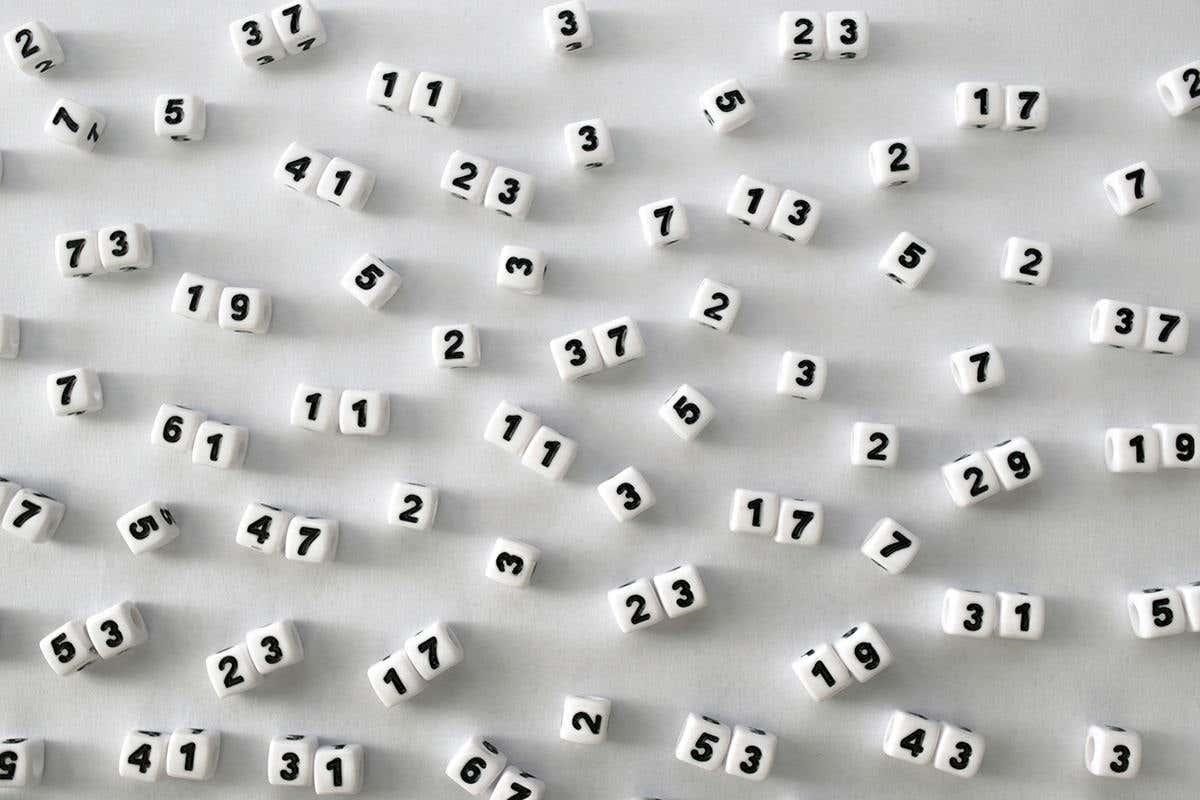
While adding up your grocery bill in the supermarket, you’re probably not thinking how important or sophisticated our number system is.

But the discovery of the present system, by unknown mathematicians in India roughly 2,000 years ago – and shared with Europe from the 13th century onwards – was pivotal to the development of our modern world.

Now, what if our “decimal” arithmetic, often called the Indo-Arabic system, had been discovered earlier? Or what if it had been shared with the Western world earlier than the 13th century?

First, let’s define “decimal” arithmetic: we’re talking about the combination of zero, the digits one through nine, positional notation, and efficient rules for arithmetic.

“Positional notation” means that the value represented by a digit depends both on its value and position in a string of digits.

Thus 7,654 means:

(7 × 1000) + (6 × 100) + (5 × 10) + 4 = 7,654

The benefit of this positional notation system is that we need no new symbols or calculation schemes for tens, hundreds or thousands, as was needed when manipulating Roman numerals.

While numerals for the counting numbers one, two and three were seen in all ancient civilisations – and some form of zero appeared in two or three of those civilisations (including India) – the crucial combination of zero and positional notation arose only in India and Central America.

Importantly, only the Indian system was suitable for efficient calculation.

Positional arithmetic can be in base-ten (or decimal) for humans, or in base-two (binary) for computers.

In binary, 10101 means:

(1 × 16) + (0 × 8) + (1 × 4) + (0 × 2) + 1

Which, in the more-familiar decimal notation, is 21.

The rules we learned in primary school for addition, subtraction, multiplication and division can be easily extended to binary.

The binary system has been implemented in electronic circuits on computers, mostly because the multiplication table for binary arithmetic is much simpler than the decimal system.

Of course, computers can readily convert binary results to decimal notation for us humans.

As easy as counting from one to ten

Perhaps because we learn decimal arithmetic so early, we consider it “trivial”.

Indeed the discovery of decimal arithmetic is given disappointingly brief mention in most western histories of mathematics.

In reality, decimal arithmetic is anything but “trivial” since it eluded the best minds of the ancient world including Greek mathematical super-genius Archimedes of Syracuse.

Archimedes – who lived in the 3rd century BCE – saw far beyond the mathematics of his time, even anticipating numerous key ideas of modern calculus. He also used mathematics in engineering applications.

Nonetheless, he used a cumbersome Greek numeral system that hobbled his calculations.

Imagine trying to multiply the Roman numerals XXXI (31) and XIV (14).

First, one must rewrite the second argument as XIIII, then multiply the second by each letter of the first to obtain CXXXX CXXXX CXXXX XIIII.

These numerals can then be sorted by magnitude to arrive at CCCXXXXXXXXXXXXXIIII.

This can then be rewritten to yield CDXXXIV (434).

(For a bit of fun, try adding MCMLXXXIV and MMXI. First person to comment with the correct answer and their method gets a jelly bean.)

Thus, while possible, calculation with Roman numerals is significantly more time-consuming and error prone than our decimal system (although it is harder to alter the amount payable on a Roman cheque).

History lesson

Although decimal arithmetic was known in the Arab world by the 9th century, it took many centuries to make its way to Europe.

Italian mathematician Leonardo Fibonacci travelled the Mediterranean world in the 13th century, learning from the best Arab mathematicians of the time. Even then, it was several more centuries until decimal arithmetic was fully established in Europe.

Johannes Kepler and Isaac Newton – both giants in the world of physics – relied heavily on extensive decimal calculations (by hand) to devise their theories of planetary motion.

In a similar way, present-day scientists rely on massive computer calculations to test hypotheses and design products. Even our mobile phones do surprisingly sophisticated calculations to process voice and video.

But let us indulge in some alternate history of mathematics. What if decimal arithmetic had been discovered in India even earlier, say 300 BCE? (There are indications it was known by this date, just not well documented.)

And what if a cultural connection along the silk-road had been made between Indian mathematicians and Greek mathematicians at the time?

Such an exchange would have greatly enhanced both worlds, resulting in advances beyond the reach of each system on its own.

For example, a fusion of Indian arithmetic and Greek geometry might well have led to full-fledged trigonometry and calculus, thus enabling ancient astronomers to deduce the laws of motion and gravitation nearly two millennia before Newton.

In fact, the combination of mathematics, efficient arithmetic and physics might have accelerated the development of modern technology by more than two millennia.

It is clear from history that without mathematics, real progress in science and technology is not possible (try building a mobile phone without mathematics). But it’s also clear that mathematics alone is not sufficient.

The prodigious computational skills of ancient Indian mathematicians never flowered into advanced technology, nor did the great mathematical achievements of the Greeks, or many developments in China.

On the other hand, the Romans, who were not known for their mathematics, still managed to develop some impressive technology.

But a combination of advanced mathematics, computation, and technology makes a huge difference.

Our bodies and our brains today are virtually indistinguishable from those of ancient times.

With the earlier adoption of Indo-Arabic decimal arithmetic, the modern technological world of today might – for better or worse – have been achieved centuries ago.

And that’s something worth thinking about next time you’re out grocery shopping.

For more such insights, log into www.international-maths-challenge.com.

*Credit for article given to Jonathan Borwein (Jon)*


Octonions: The Strange Maths That Could Unite The Laws Of Nature

Could a system of eight-dimensional numbers help physicists find a single mathematical framework that describes the entire universe?

Words can be slippery. That is perhaps even more true in physics than it is in the rest of life. Think of a “particle”, for instance, and we might conjure an image of a tiny sphere. In truth, “particle” is just a poetic term for something far removed from our everyday experience – which is why our best descriptions of reality make use of the cold precision of mathematics.

But just as there are many human languages, so there is more than one type of number system. Most of us deal with only the familiar number line that begins 1, 2, 3. But other, more exotic systems are available. Recently, physicists have been asking a profound question: what if we are trying to describe reality with the wrong type of numbers?

Each mathematical system has its own special disposition, just like languages. Love poems sound better in French. German has that knack of expressing sophisticated concepts – like schadenfreude – in a few syllables. Now, in the wake of a fresh breakthrough revealing tantalising connections between models of how matter works at different energy scales, it seems increasingly likely that an exotic set of numbers known as the octonions might have what it takes to capture the truth about reality.

Mathematicians are excited because they reckon that by translating our theories of reality into the language of the octonions, it could tidy up some of the deepest problems in physics and clear a path to a “grand unified theory” that can describe the universe in one statement. “This feels like a very promising direction,” says Latham Boyle at the Perimeter Institute in Waterloo, Canada. “I find it irresistible to think about.”

Many physicists dream of finding a grand unified theory, a single mathematical framework that tells us where the forces of nature come from and how they act on matter. Critically, such a theory would also capture how and why these properties changed over the life of the universe, as we know they have.

So far, the closest we have come is the standard model of particle physics, which details the universe’s fundamental particles and forces: electrons, quarks, photons and the rest. The trouble is, the standard model has its shortcomings. To make it work, we must feed in around 20 measured numbers, such as the masses of particles. We don’t know why these numbers are what they are. Worse, the standard model has little to say about space-time, the canvas in which particles live. We seem to live in a four-dimensional space-time, but the standard model doesn’t specify that this must be so. “Why not, say, seven-dimensional space-time?” Boyle wonders.

Real and imaginary numbers

Many think the solution to these woes will come when experiments uncover a missing piece of the standard model. But after years of effort, this hasn’t happened, and some are wondering if the problem is the maths itself.

Mathematicians have known for centuries that there are numbers other than the ones we can count on our fingers. Take the square root of -1, known as i. There is no meaningful answer to this expression, as both 1 × 1 and -1 × -1 are equal to 1, so i is an “imaginary number”. They found that by combining i with real numbers – which include all the numbers you could place on a number line, including negative numbers and decimals – they could fashion a new system called the complex numbers.

Think of complex numbers as being two-dimensional; the two parts of each number can record unrelated properties of the same object. This turns out to be extremely handy. All our electronic infrastructure relies on complex numbers. And quantum theory, our hugely successful description of the small-scale world, doesn’t work without them.

In 1843, Irish mathematician William Rowan Hamilton took things a step further. Supplementing the real and the imaginary numbers with two more sets of imaginary numbers called j and k, he gave us the quaternions, a set of four-dimensional numbers. Within a few months, Hamilton’s friend John Graves had found another system with eight dimensions called the octonions.

Real numbers, complex numbers, quarternions and octonions are collectively known as the normed division algebras. They are the only sets of numbers with which you can perform addition, subtraction, multiplication and division. Wilder systems are possible – the 16-dimensional sedenions, for example – but here the normal rules break down.

Today, physics makes prolific use of three of these systems. The real numbers are ubiquitous. Complex numbers are essential in particle physics as well as quantum physics. The mathematical structure of general relativity, Albert Einstein’s theory of gravity, can be expressed elegantly by the quaternions.

The octonions stand oddly apart as the only system not to tie in with a central physical law. But why would nature map onto only three of these four number systems? “This makes one suspect that the octonions – the grandest and least understood of the four – should turn out to be important too,” says Boyle.

In truth, physicists have been thinking such thoughts since the 1970s, but the octonions have yet to fulfil their promise. Michael Duff at Imperial College London was, and still is, drawn to the octonions, but he knows many have tried and failed to decipher their role in describing reality. “The octonions became known as the graveyard of theoretical physics,” he says.

That hasn’t put off a new generation of octonion wranglers, including Nichol Furey at Humboldt University of Berlin. She likes to look at questions in physics without making any assumptions. “I try to solve problems right from scratch,” she says. “In doing so, you can often find alternate paths that earlier authors may have missed.” Now, it seems she and others might be making the beginnings of an octonion breakthrough.

Internal symmetries in quantum mechanics

To get to grips with Furey’s work, it helps to understand a concept in physics called internal symmetry. This isn’t the same as the rotational or reflectional symmetry of a snowflake. Instead, it refers to a number of more abstract properties, such as the character of certain forces and the relationships between fundamental particles. All these particles are defined by a series of quantum numbers – their mass, charge and a quantum property called spin, for instance. If a particle transforms into another particle – an electron becoming a neutrino, say – some of those numbers will change while others won’t. These symmetries define the structure of the standard model.

Internal symmetries are central to the quest for a grand unified theory. Physicists have already found various mathematical models that might explain how reality worked back at the time when the universe had much more energy. At these higher energies, it is thought there would have been more symmetries, meaning that some forces we now experience as distinct would have been one and the same. None of these models have managed to rope gravity into the fold: that would require an even grander “theory of everything”. But they do show, for instance, that the electromagnetic force and weak nuclear force would have been one “electroweak” force until a fraction of a second after the big bang. As the universe cooled, some of the symmetries broke, meaning this particular model would no longer apply.

Each different epoch requires a different mathematical model with a gradually reducing number of symmetries. In a sense, these models all contain each other, like a set of Russian dolls.

One of the most popular candidates for the outermost doll – the grand unified theory that contains all the others – is known as the spin(10) model. It has a whopping 45 symmetries. In one formulation, inside this sits the Pati-Salam model, with 21 symmetries. Then comes the left-right symmetric model, with 15 symmetries, including one known as parity, the kind of left-right symmetry that we encounter when we look in a mirror. Finally, we reach the standard model, with 12 symmetries. The reason we study each of these models is that they work; their symmetries are consistent with experimental evidence. But we have never understood what determines which symmetries fall away at each stage.

In August 2022, Furey, together with Mia Hughes at Imperial College London, showed for the first time that the division algebras, including the octonions, could provide this link. To do so, they drew on ideas Furey had years ago to translate all the mathematical symmetries and particle descriptions of various models into the language of division algebras. “It took a long time,” says Furey. The task required using the Dixon algebra, a set of numbers that allow you to combine real, complex, quaternion and octonion maths. The result was a system that describes a set of octonions specified by quaternions, which are in turn specified by complex numbers that are specified by a set of real numbers. “It’s a fairly crazy beast,” says Hughes.

It is a powerful beast, too. The new formulation exposed an intriguing characteristic of the Russian doll layers. When some numbers involved in the complex, quaternion and octonion formulations are swapped from positive to negative, or vice versa, some of the symmetries change and some don’t. Only the ones that don’t are found in the next layer down. “It allowed us to see connections between these well-studied particle models that had not been picked up on before,” says Furey. This “division algebraic reflection”, as Furey calls it, could be dictating what we encounter in the real physical universe, and – perhaps – showing us the symmetry-breaking road up to the long-sought grand unified theory.

The result is new, and Furey and Hughes haven’t yet been able to see where it may lead. “It hints that there might be some physical symmetry-breaking process that somehow depends upon these division algebraic reflections, but so far the nature of that process is fairly mysterious,” says Hughes.

Furey says the result might have implications for experiments. “We are currently investigating whether the division algebras are telling us what can and cannot be directly measured at different energy scales,” she says. It is a work in progress, but analysis of the reflections seems to suggest that there are certain sets of measurements that physicists should be able to make on particles at low energies – such as the measurement of an electron’s spin – and certain things that won’t be measurable, such as the colour charge of quarks.

Among those who work on octonions, the research is making waves. Duff says that trying to fit the standard model into octonionic language is a relatively new approach: “If it paid off, it would be very significant, so it’s worth trying.” Corinne Manogue at Oregon State University has worked with octonions for decades and has seen interest ebb and flow. “This moment does seem to be a relative high,” she says, “primarily, I think, because of Furey’s strong reputation and advocacy.

The insights from the octonions don’t stop there. Boyle has been toying with another bit of exotic maths called the “exceptional Jordan algebra”, which was invented by German physicist Pascual Jordan in the 1930s. Working with two other luminaries of quantum theory, Eugene Wigner and John von Neumann, Jordan found a set of mathematical properties of quantum theory that resisted classification and were closely related to the octonions.

Probe this exceptional Jordan algebra deeply enough and you will find it contains the mathematical structure that we use to describe Einstein’s four-dimensional space-time. What’s more, we have known for decades that within the exceptional Jordan algebra, you will find a peculiar mathematical structure that we derived through an entirely separate route and process in the early 1970s to describe the standard model’s particles and forces. In other words, this is an octonionic link between our theories of space, time, gravity and quantum theory. “I think this is a very striking, intriguing and suggestive observation,” says Boyle.

Responding to this, Boyle has dug deeper and discovered something intriguing about the way a class of particles called fermions, which includes common particles like electrons and quarks, fits into the octonion-based language. Fermions are “chiral”, meaning their mirror-image reflections – the symmetry physicists call parity – look different. This had created a problem when incorporating fermions into the octonion-based versions of the standard model. But Boyle has now found a way to fix that – and it has a fascinating spin-off. Restoring the mirror symmetry that is broken in the standard model also enables octonionic fermions to sit comfortably in the left-right symmetric model, one level further up towards the grand unified theory.

Beyond the big bang

This line of thinking might even take us beyond the grand unified theory, towards an explanation of where the universe came from. Boyle has been working with Neil Turok, his colleague at the Perimeter Institute, on what they call a “two-sheeted universe” that involves a set of symmetries known as charge, parity and time (CPT). “In this hypothesis, the big bang is a kind of mirror separating our half of the universe from its CPT mirror image on the other side of the bang,” says Boyle. The octonionic properties of fermions that sit in the left-right symmetric model are relevant in developing a coherent theory for this universe, it turns out. “I suspect that combining the octonionic picture with the two-sheeted picture of the cosmos is a further step in the direction of finding the right mathematical framework for describing nature,” says Boyle.

As with all the discoveries linking the octonions to our theories of physics so far, Boyle’s work is only suggestive. No one has yet created a fully fledged theory of physics based on octonions that makes new predictions we can test by using particle colliders, say. “There’s still nothing concrete yet: there’s nothing we can tell the experimentalists to go and look for,” says Duff. Furey agrees: “It is important to say that we are nowhere near being finished.

But Boyle, Furey, Hughes and many others are increasingly absorbed by the possibility that this strange maths really could be our best route to understanding where the laws of nature come from. In fact, Boyle thinks that the octonion-based approach could be just as fruitful as doing new experiments to find new particles. “Most people are imagining that the next bit of progress will be from some new pieces being dropped onto the table,” he says. “That would be great, but maybe we have not yet finished the process of fitting the current pieces together.”

For more such insights, log into www.international-maths-challenge.com.

*Credit for article given to Michael Brooks*


Quadratic Number Spirals and Polygonal Numbers

Take the positive Integer number-line, place it in the xy plane (with zero at the origin), and wrap it counterclockwise around the origin so that the formerly straight number-line forms a spiral. Do this so that the square numbers (1, 4, 9, …) all line up along the positive x axis one unit apart.

Equipped with this number spiral, you can now plot sequences of positive integers on it and, in some cases, interesting curves will emerge.

Because of how we have wound our  number spiral, quadratic sequences are particularly nice to plot. So how can we possibly resist spiral-plotting the 2-dimensional polygonal numbers? The plots below are of the 2-dimensional k-polygonal numbers for = 3, 5, 12, and 13, that fall between 1 and 5000.

Plotting two polygonal number sequences on the same spiral gives us a way to see some of the numbers for which the sequences overlap (they do this at what are called highly polygonal numbers). For example, it turns out that every hexagonal number is also a triangular number. The image below shows an overlay of both the k = 6 and k = 3 sequences – numbers that are both hexagonal and triangular are shown as large dots, while the non-hexagonal triangular numbers are smaller.

The square and triangular number sequences line up less exactly than the hexagonal and triangular example above, but their overlap represents a well-known sequence in its own right (Sloane A001110 – see also wikipedia). The square-triangular sequence comes up surprisingly often in recreational mathematics, including a recently in an article about inquisitive computing by Brain Hayes. In the image below, the square numbers are squares, the triangular numbers are dots, and those that are both show up as triangles (1, 36, and  1225 are shown).

For more such insights, log into www.international-maths-challenge.com.

*Credit for article given to dan.mackinnon*


Generating Random Walks in Mathematics

With connections to the study of gambling, Brownian motion, fractals, and more, random walks are a favourite topic in recreational mathematics.

The diagram above (from Energy transformations during horizontal walking by F. G. Benedict and H. Murschhauser, published in 1915) suggests one method for generating walking data. Creating random walk simulations in Fathom or TinkerPlots is a little more straightforward.

First simulation – using sliders to determine a ‘base angle’

This first example lets you set up random walks where the direction chosen is based on an angle k*2pi/n for a fixed n (whose value is determined by a slider) and a random k (a random integer between 1 and n).

First, create a slider n, then create the attributes below and finally add the data (any number is fine – start with ~500 cases). The formulas below were entered in TinkerPlots, but would work equally well in Fathom.

Plots of (x,y) will show the walk, and plots of (step, distance) will show how the distance from the origin changes over the course of the walk. Different values for n provide walks with their own particular geometries.

The walks start at (0,0) and wander about the plane from there. Re-randomizing (CNTRL-Y) generates new walks.

The simulation gives lots of nice pictures of random walks. You could generate statistics from these by adding measures and measure collections.

One limitation of this simulation is that it is difficult to determine exactly when the walker has returned to the start (0,0).  This turns out to be an interesting question for random walks on the plane (see the wikipedia entry for more on this). Because of the inexactness in the positions calculated using sine and cosine, the walker seems to never return to the origin. There are several ways of dealing with this, but one is to design a simpler simulation that uses exact values – one that sticks to lattice points (xy), where x and y are both integers.

Second simulation – sticking to Integer lattice points

This second simulation can be thought of an ‘urban walker’ where all paths must follow a strictly laid out grid, like some downtown streets. The exactness of the positions means that we can detect with confidence when the walker has crossed back to their starting point. For this simulation, no slider is required – just enter the attributes and add cases.

Using the crossed_start attribute as a filter or to gather measures, you will find that walks often quickly pass over the starting point. You will also find that as you increase the number of cases, the straight ‘etch-a-sketch’ lines of the urban walk take on very interesting fractal-like contours.

For more such insights, log into www.international-maths-challenge.com.

*Credit for article given to dan.mackinnon*


Quasi-regular Rhombic Tiling and Polyhedron

It could be argued that the square is the ‘nicest’ rhombus, but the rhombus with angles of 60 and 120 degrees seems nicer still. One of the nice things about the 60/120 rhomb are the plane tilings that can be constructed from it. One of these tilings is the ‘tumbling blocks’ tiling shown at the top of the post, in which at some points you see ‘cubes’ (around the degree 3 vertices), while at others you see ‘flowers’ (around the degree 6 vertices). Because of the two different types of vertices, this is known as a quasi-regular rhombic tiling. (Another tiling that uses the 60/120 rhomb is this one.)

If you want to build a polyhedron that resembles the tumbling block tiling, one method is to reduce the number of petals in your flowers to 5, and then stretch your 60/120 rhombs until they are have angles of 63.435 and 116.565 degrees. Thirty of these rhombs arranged around vertices of degree 3 and 5 produces a quasi-regular polygon known as the rhombic triacontahedron.

The image above is of a model that was built using rhombic units printed onto card stock.

Despite the apparent ugliness of the 63.435 and 116.565 degree angle-measurements, our nice 60/120 rhomb has been, arguably, stretched into an even nicer one – a ‘golden rhombus,’ so called because the ratio of the diagonals is equal to the golden ratio.

The dual of the rhombic triacontahedron is the archemedian polyhedron known as the icosidodecahedron.

For more such insights, log into www.international-maths-challenge.com.

*Credit for article given to dan.mackinnon*


Spherical Tetrahedron

Imagine a tetrahedron centered inside a sphere. If you were to project the edges of the tetrahedron out from the center so that they touched the surface of the sphere, the edges would cut the sphere in arcs that lie on the sphere’s ‘great circles’ (the largest possible circles drawn on the surface of the sphere – circles whose radii are the same as the radius of the sphere).

The image at the top of this post shows a model of a sphere with the six great circles formed by the projected edges of a tetrahedron sitting at its center.

The model, described on pages 4 and 5 of Magnus Wennigers’ Polyhedron Models, is easy to construct using the template shown below. Printing copies of the template onto card-stock and gluing them together works well. This pdf file has 10 arcs on a single page for printing (you will need 24 arcs in total).

Each arc is folded and glued to form a spherical triangle, 24 of the spherical triangles glued together will form the sphere.

The diagram below (based on Fig.2, p.5, in Wenniger) shows how to assemble 6 of the triangles into one ‘face’ of the spherical tetrahedron. Four of the faces can be assembled into the ‘spherical tetrahedron.’ When assembling, you should make sure that you align the triangles so that they form great circles.

Spherical triangles, as you can tell from the diagram, do not follow the rule of having their interior angles sum to pi (180 degrees), as plane triangles do.

The arc is divided into angles of 54deg&44min, 70deg&32min, 54deg&44min, as described by Wenniger. The template was created in GSP.

For more such insights, log into www.international-maths-challenge.com.

*Credit for article given to dan.mackinnon*


False Positives in Probability

There are plenty of probability problems that have counter-intuitive solutions. Problems like these, and how they can undermine common sense, are among the best reasons for looking at probability theory. One set of humbling questions is the family of Monty Hall problems. Another are those related to conditional probability; nice examples of these are problems that involve medical tests that give ‘false positive’ results.

Simulation is a way of exploring these problems that reveals more than mere theoretical probability calculations do. The structure of the simulation can reflect interesting aspects of the structure of the original problem, and the results reveal a variability that is not apparent when you simply calculate the theoretical probabilities on their own.

This post shows an example of a ‘false positive’ probability problem and a Fathom simulation for it. This problem was adapted from one found in the 4th edition of Ross’s A First Course in Probability (p.75):

A laboratory blood test is 95 percent effective in detecting a certain disease when it is, in fact, present. However, the test also yields a “false positive” result for one percent of healthy persons. (That is, if a healthy person is tested, there is a 0.01 probability that they will test positive for the disease, even though they don’t really have it.) If 0.5 percent of the population actually has the disease, what is the probability that a person who has a positive test result actually has the disease?

Here are the attribute definitions that you could use to build a Fathom simulation for this problem:

The attributes are enough to run the simulation, but it is better to also add the following measures:

To run the simulation you can add new cases (try ~500). Using a measures collection, you can re-run this experiment hundreds of times (collecting a 100 measures re-runs the 500 person experiment 100 times).

If you are calculating the theoretical probability by hand, it helps to write down all of the probabilities (fill in the blanks…):

It also helps to visualize the probabilities in a tree diagram:

The outer tips of the tree are filled in using the multiplicative rule for conditional probabilities:

One nice thing about doing this is that you can see how the tree diagram used to calculate the theoretical probabilities is structured in the same way as the “if” statements in the simulation.

For more such insights, log into www.international-maths-challenge.com.

*Credit for article given to dan.mackinnon*


Dividing Polynomials – The Grid Method

Students generally learn to divide polynomials using  long division or synthetic division. This post is about another method for dividing polynomials,  the “grid” method. Although this method is used at some schools, I have not found it in any textbook (if you know of any, please let me know).

The grid method makes polynomial division a fun calculation – an almost SUDOKU-like process. The recreational challenge here is to master the method, and to convince yourself that it actually works in all cases (which cases does it work well for, and which are more difficult?).

Before tackling polynomial grid division, you need to be familiar with polynomial grid multiplication. It is the symbolic analog to the familiar “algebra tiles” manipulative, so if you have worked with these, it should be reasonably familiar.

Polynomial Grid Multiplication

In polynomial grid multiplication, the two factors are arranged on the edges of a grid – the number of terms of the factors determine the number of horizontal and vertical lines that make up the grid.

The overall product is found by filling in the cells of the grid with the product of the terms for the row and column, and then summing up all the contents of the interior of the grid.

What polynomial grid multiplication does for us is provide an explicit way to keep track of the distributive property: each term-by-term product gets its own cell.

In the example below, the two factors are placed along the edges of the grid (1). One factor provides the row headings, the other provides the column headings. Then each cell is filled in with the product of the terms from the row and column (2). Finally, the cells are added together (like terms are combined) to find the final product (3). If the terms of the factors are placed according to the same order (descending powers of x, in our example) and there are no missing terms, then like-terms of the product are found along the diagonals of the grid.

Polynomial Grid Division

Polynomial grid division works the same way as polynomial grid multiplication, but in reverse – we start by knowing one of the factors (placed along the edge of the grid), and by knowing what we want the product to be (without knowing exactly how it is ‘split up’ in the grid). Using this knowledge we work backwards, filling in the grid and the top edge one cell at a time until we are done.

Consider the example below. In (1) we create an empty grid with the denominator (divisor) playing the role of one of the factors. Since this question involves a degree 3 polynomial divided by a degree 1 polynomial, we know that the other factor (the quotient) must be degree 2. This allows us to create a grid with the correct size. In step (2) we use the highest power of the dividend (the numerator) to begin to fill in the grid – we know that 27x^3 must be in the top left. This in turn tells us that the first column entry must be 9x^2 (so that the row and column multiply to 27x^3). In step (3) we use this to fill in all of the first column, multiplying 9x^2 by the terms of the row entries.

In step (3) we now have a quadratic term -18x^2. But we know from looking at the dividend (numerator) that in the final answer we actually want 9x^2. Consequently, the other entry on the quadratic diagonal must be 27x^2, so that the whole diagonal sums to 9x^2 .  Filling this in for step (4) tells us what all the entries in the second column should be (step 5). Now that we have a linear entry -18x, we know that we need to add in a 15x so that the overall sum gives a -3x (step 6).

Having a 15x tells us that the top entry must be 5 (the product of 5 and 3x gives us 15x). Filling this in in step 7 allows us to complete the table, and we see that our final constant entry is -10, as hoped for. Now that the grid has been filled in and it matches the dividend, we can read the answer off the top – the factor that we have uncovered is the quotient we were hoping to calculate.

This method is actually easier than it seems at first, and when all steps are carried out on the same grid, is quite compact.

Here is another example for you to try it out on.

In these two examples, the division worked well – there was no remainder. In the case where we are dividing f/g and g is not a factor of f, and the degree of g is less than the degree of f, there is polynomial remainder whose degree is strictly less than that of g. So, for example, when g is a linear function (degree 1), f/g can have a constant remainder (degree 0).

In this case we proceed as above, attempting to fill in the grid with the numerator (dividend). However, if when we are done the grid does not match the numerator, we have a remainder. The remainder is the additional amount that we have to add to the grid in order to arrive at the numerator.

Consider a division question almost identical to the first one that we looked at, except here we change the numerator slightly so that it doesn’t factor well.

Following the same steps as before, we end up with a grid sum that does not match our desired answer: we have -10 instead of -9 for the final constant term. This tells us that we have a remainder of +1, that we choose to write next to the grid. In our final answer, the remainder tells us the “remaining fractional part” that we have to add at the end.

For more such insights, log into www.international-maths-challenge.com.

*Credit for article given to dan.mackinnon*


Farey definition, property, and algorithm

Here is an outline of how you can go about generating this data. The definition and properties of Farey sequences here are from Hardy & Wright’s An Introduction to the Theory of Numbers (which I am slowly working my way through).
The Farey sequence of order n is the sequence of irreducible fractions between 0 and 1 whose denominator does not exceed n. So, the elements of the sequence are of the form h/k, where h < k < n, and h and k are relatively prime.

The main theorem about Farey numbers provides them with their characteristic property (Theorem 29 in TofN). The characteristic property of Farey sequences is that if h/kh”/k”, and h’/k’ are successive terms in a Farey sequence, then h”/k” is the mediant of h/k and h’/k’. If h/k and h’/k’ are two reduced fractions, their mediant is given by (h+h’)/(k+k’).

It’s nice when a theorem tells you how to implement an algorithm. This property tells us that Farey sequences can be built iteratively or recursively, beginning with F1={0/1 ,1/1}. The algorithm to do this is a nice one – it’s probably not often used as a textbook exercise in recursion because it helps if you to have some data structure or class to represent the fraction, and a way of telling if integers are relatively prime (you can use the Euclidean algorithm to implement a gcd() function).

Here is an outline of how to calculate the next Farey sequence, given that you have one already.

0) input a Farey sequence oldSequence (initial sequence will be {0/1, 1/1})

1) create a new empty sequence newSequence

2) iterate over oldSequence and find out its level by finding the largest denominator that occurs store this in n

3) set n= n+1

4) iterate over oldSequence, looking at each pair of adjacent elements (left and right)

4.1) add left to newSequence
4.2) if the denominators of left and right sum to n, form their mediant
4.2.1) if the numerator and denominator of the mediant are relatively prime, add mediant to newSequence

5) add the last element of oldSequence to newSequence

Note that you only need to add in new elements where the denominators of existing adjacent elements sum to the n value – when this happens you form the mediant of the two adjacent elements. Furthermore, the mediant is only added if the fraction can’t be reduced.

Below is some Java-ish code corresponding to the above – it assumes that the oldSequence and newSequence are an ArrayList and that you have a class Fraction that has fields num (numerator) and den (denominator).

Here are the first five Farey sequences that you get from the algorithm:

The image at the top of the post was generated by implementing the algorithm in Processing, and using the result to draw the associated Ford circles – you could do something similar in regular Java (or other language). If you draw the Ford Circles associated with the sequence, the circle for a fraction “frac” will be centered at (x,y) and have a radius r where

x = (scale)*frac.num/frac.den

y = r

r = (scale)/(2*(frac.den)^2)

where “scale” is some scaling factor (probably in the 100’s) that increases the size of the image.

Here I decided to draw two copies of each circle, one on top of the other.


That it contains only fractions between 0 and 1 and that it contains all reduced fractions for denominators n, connects Farey sequences to Euler’s totient function. Euler’s totient function is an arithmetic function that for a given k, counts the integers less than k that are relatively prime to it. This is exactly the number of times that a fraction of the form h/k will appear in the Farey sequence for k>1.

The Farey algorithm, how to draw Ford circles, and the connection to Euler’s totient function are described nicely in J.H. Conway and R.K. Guy’s The Book of Numbers – a great companion to a book like TofN.


For more such insights, log into www.international-maths-challenge.com.

*Credit for article given to dan.mackinnon*


The Sequence of Primes

As I make my way through Hardy & Wright’s An Introduction to the Theory of Numbers,  I am hoping to work it into my recreational math pursuits – coming up with interesting (but not too heavy) activities that correspond roughly to the material in the text.

The first two chapters are on the sequence of primes. Here’s the activity: obtain a list of primes, import them into Fathom, and construct plots that explore pn and pi(n) and other aspects of the sequence that manifest themselves in the first couple of thousand terms.

In my Fathom experiment, I imported the first 2262 prime numbers.

If you import a sequential list of primes into Fathom (under the attribute prime) and add another attribute n=caseindex, you can create two nice plots. Plot A should have prime as the x axis and n  as the y axis. This shows the function pi(n). To this plot you should add the function x/ln(x) and visually compare the two curves. Plot B should have the x and y axis reversed. On this graph, plotting the function y = x*ln(x) shows how closely this approximation for pn (the nth prime) comes to the actual values.


You can add further attributes to look at the distance between primes dist=prime-prev(prime), and also the frequency of twin primes is_twin = (dist=2)or(next(dist)=2).

You can also add attributes to keep a running count of twin_primes, and to keep a running average of the twin_primes. The plot above shows how the ratio of tiwn primes diminishes as the number of primes increases. The plot at the top of the post suggests the distribution of primes and twin primes (in blue) in the numbers up to the 2262nd prime.

For more such insights, log into www.international-maths-challenge.com.

Credit for article given to dan.mackinnon*