Can we use bees as a model of intelligent alien life to develop interstellar communication?

Scarlett Howard

Humans have always been fascinated with space. We frequently question whether we are alone in the universe. If not, what does intelligent life look like? And how would aliens communicate?

The possibility of extraterrestrial life is grounded in scientific evidence. But the distances involved in travel between the stars are vast. If we do contact aliens, it would likely be via long distance communication, with our nearest neighbouring star being 4.4 light years away. Even being optimistic, it would likely take more than ten years for any round-trip communication.

How could that work when we have no shared language? Well, consider how we can engage with creatures here on Earth with minds quite alien to our own: bees.

Despite the vast differences in human and bee brains, both of us can do mathematics. As we argue in a new paper published in the journal Leonardo, our thought experiment lends weight to the idea that mathematics may form the basis for a “universal language,” which might one day be used to communicate between the stars.

Mathematics as the language of science

The idea of mathematics as universal is not new. Writing in the 17th century, Galileo Galilei described the universe as a grand book “written in the language of mathematics”.

Science fiction, too, has long explored the idea of mathematics as a universal language. In the 1985 novel and 1997 film Contact, extraterrestrials reach out to humans using a repeating sequence of prime numbers sent via radio signal.

In The Three-Body Problem, a novel by Liu Cixin adapted into a Netflix series, communication between aliens and humans to solve a mathematical problem occurs through a video game.

Mathematics also features in a 1998 novella by Ted Chiang called Story of Your Life, which was adapted into the 2016 film Arrival. It describes aliens with a non-linear experience of time and a correspondingly different formulation of mathematics.

Real scientific efforts at universal communication have also involved mathematics and numbers. The covers of the Golden Records, which accompanied the Voyager 1 and 2 space probes launched in 1977, are etched with mathematical and physical quantities to “communicate a story of our world to extraterrestrials”.

The 1974 Arecibo radio message beamed out into space consisted of 1,679 zeros and ones, ordered to communicate the numbers one to ten and the atomic numbers of the elements that make up DNA. In 2022, researchers developed a binary language designed to introduce extraterrestrials to human mathematics, chemistry, and biology.
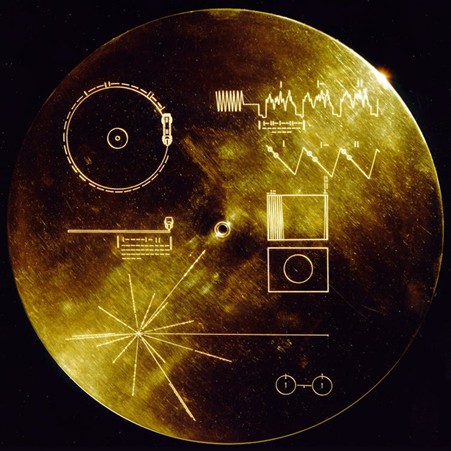
This gold-aluminum cover was designed to protect the Voyager 1 and 2 ‘Sounds of Earth’ gold-plated records from micrometeorite bombardment, but also served a second purpose in providing the finder with a key to playing the record using binary arithmetic and numbers, as well as schematics to explain the process. NASA/JPL

How do we test a universal language without aliens?

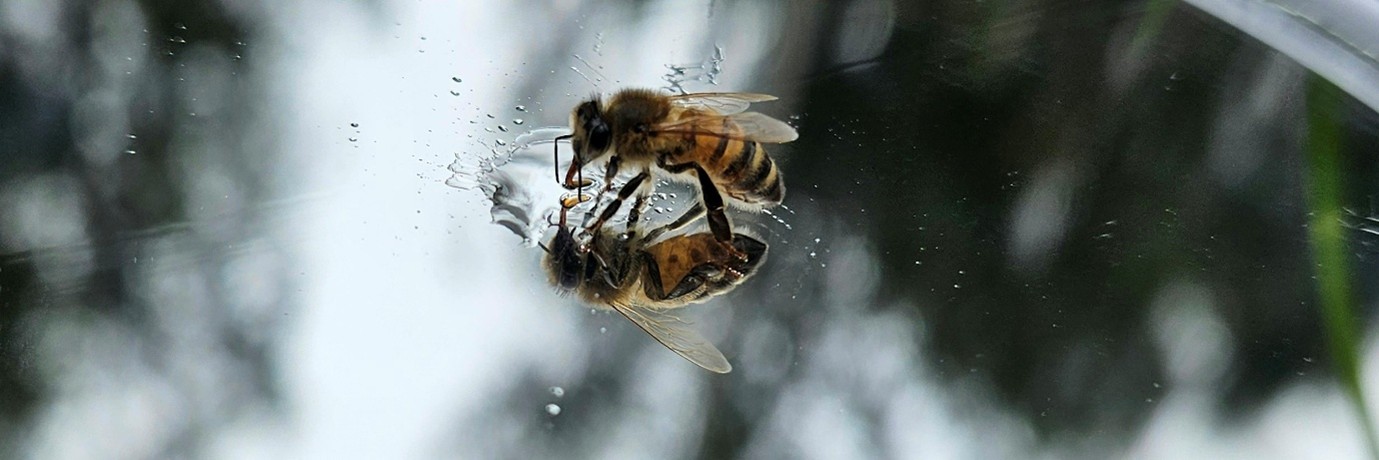
A creature with two antennae, six legs, and five eyes may sound like an alien, but it also describes a bee. (Science fiction has of course imagined “insectoid” aliens.)

The ancestors of bees and humans diverged over 600 million years ago, yet we both possess communication, sociality, and some mathematical ability. Since parting ways, both honeybees and humans have independently developed effective, but different, means of communication and cooperation within complex societies.

Humans have developed language. Honeybees evolved the waggle dance – which communicates the location of food sources including distance, direction, angle from the Sun, and quality of the resource.

Due to our vast evolutionary separation from bees, as well as the differences between our brain sizes and structures, bees could be considered an insectoid alien model that exists right here on Earth. At least for the purposes of our thought experiment.

Bees and mathematics

In a series of experiments between 2016 and 2024, we explored the ability of bees to learn mathematics. We worked with freely flying honeybees that chose to regularly visit and participate in our outdoor maths tests to receive sugar water.

During the tests, bees showed evidence of solving simple addition and subtraction, categorising quantities as odd or even, and ordering quantities of items, including an understanding of “zero”. Bees even demonstrated the ability to link symbols with numbers, in a simple version of how humans learn Arabic and Roman numerals.
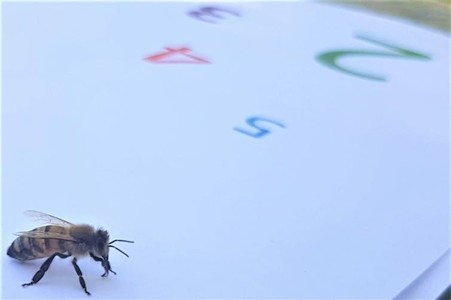
Bees have demonstrated the ability to learn simple arithmetic and can perform other numerical feats. Scarlett Howard

Despite the miniature brains of bees, they have demonstrated a rudimentary capacity to perform mathematics and learn to solve problems with quantities. Their mathematical ability involved learning to add and subtract one, which provides a launching pad to more abstract mathematics. The ability to add or subtract by one theoretically allows bees to represent all of the natural numbers.

If two species considered alien to each other – humans and honeybees – can perform mathematics, along with many other animals, then perhaps mathematics could form the basis of a universal language.

If there are extraterrestrial species, and they have sufficiently sophisticated brains, then our work suggests that they may have the capacity to do mathematics. A further question to be answered is whether different species will develop different approaches to mathematics, akin to dialects in language.

Such discoveries would also help to answer the question of whether mathematics is an entirely human construction, or if it is an a consequence of intelligence and thus, universal.

For more such insights, log into www.international-maths-challenge.com.

*Credit for article given to Scarlett Howard, Adrian Dyer & Andrew Greentree*

The science of the casino: why the house always wins in the long run

Leo Visions / Unsplash

You’ve probably heard the phrase “the house always wins” when it comes to casino gambling. But what does it actually mean?

After all, people do hit jackpots, and casino games are supposed to be fair – so what guarantees the casino still comes out ahead?

The answer lies in a simple but powerful mathematical idea called “the house edge”: a small, systematic statistical advantage built into every casino game. It’s the invisible force that ensures the numbers will always tilt toward the house in the long run.

So, let’s unpack the science behind that edge: how it’s constructed, and how it plays out over repeated bets.

Roulette: the clearest place to see the house edge at work

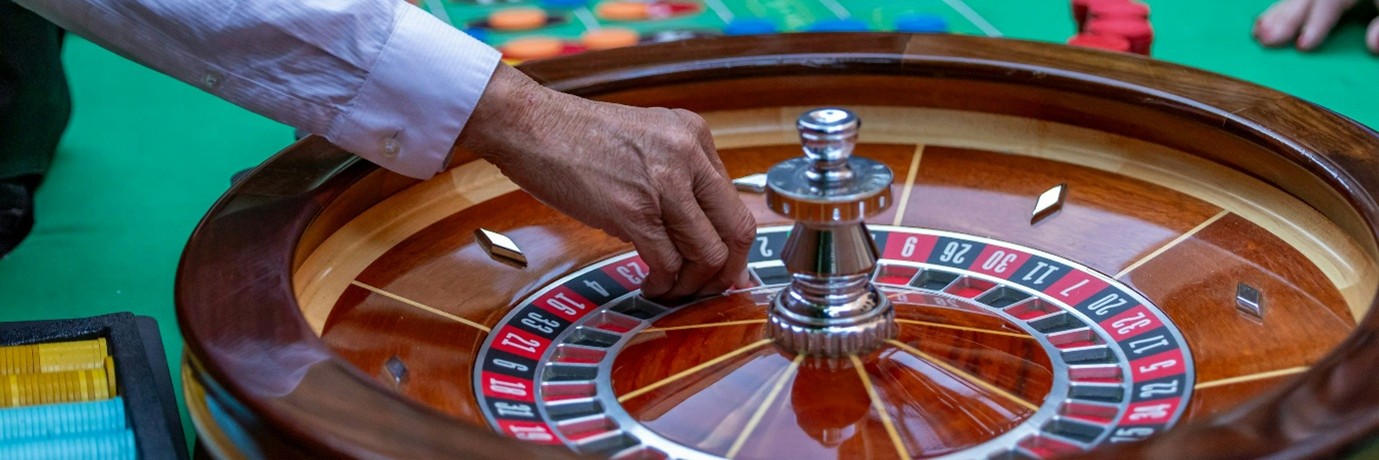
Roulette looks like one of the fairest games in the casino. A spinning wheel with numbered pockets, half coloured red and half coloured black, and a single ball sent careening around the outside to eventually land in one pocket at random. If you bet the ball will land in a red pocket (or a black one), it feels like a 50–50 gamble.

But the real odds are a little bit different. In most Australian casinos you’ll find 38 pockets on the roulette wheel: 18 red, 18 black, and two “zero” pockets marked 0 and 00. (In Europe roulette wheels have 37 pockets, with only a single 0.)

The zero pockets are what creates the house edge. The casino pays out as if the odds were 50–50 – if you get the colour right, you get back double the amount you bet. But in reality, on a wheel with two zero pockets your chance of winning is 47.37%.

When you bet on a colour, the house has a 5.26% edge – meaning gamblers lose about five cents per dollar on average. A single-zero wheel is slightly kinder at 2.7%.

You don’t see the house edge in the course of a few spins. But casinos don’t rely on a few spins. Over thousands of bets, the law of large numbers takes over. This is a fundamental idea in probability that implies the more times you repeat a game with fixed odds, the closer your results get to the true mathematical average. The short-term ups and downs flatten out, and the house edge asserts itself with near certainty.

The law of large numbers is why casinos aren’t bothered by who wins this spin, or even tonight. They care about what happens over the next million bets.

The Gamblers’ Ruin problem

Another way to see why the house always wins is through the so-called Gambler’s Ruin problem.

The problem asks what happens if a player with a limited bankroll keeps betting against an opponent with effectively unlimited money (even in a fair game).

The mathematical answer is blunt: the gambler will eventually go broke.

In other words, even if the odds are perfectly even, the side with finite resources loses in the long run simply because random fluctuations will push them to zero at some point. Once you hit zero, the game stops, while the house is still standing.

Casinos, of course, stack the odds even further by giving themselves a small edge on every bet. That tiny disadvantage, combined with the fact the house never runs out of money, makes ruin mathematically inevitable.

The more bets you make, the worse your chances

Say you walk into a casino with a simple goal. You want to win $100, and you plan to quit as soon as you hit that target.

Your approach is to play roulette, betting $1 at a time on either red or black.

How much money do you need to bring to have a decent chance of reaching your $100 goal? A thousand dollars? A million? A billion?

Here’s the surprising truth: no amount of money is enough.

If you keep making $1 bets in a game with a house edge, you are practically certain to go broke before getting $100 ahead of where you started, even if you arrive with a fortune.

In fact, the probability of gaining $100 before losing $100 million with this strategy is less than 1 in 37,000.

You could walk in with life-changing wealth and still almost certainly never hit your modest $100 goal.

Betting bigger may give you a fighting chance

So how do you create a real chance of success? You must either lower your target or change your strategy entirely.

If your target were only $10, you’d suddenly have over a 50% chance of going home happy, even if you started with just $25. A smaller goal means fewer bets, which means less opportunity for the house edge to grind you down.

Or you can flip the logic of Gambler’s Ruin: instead of making hundreds of small, disadvantageous bets, you can make one big bet.

If you put $100 on red all at once, your chance of success jumps to roughly 47%. This is far higher than the near-zero chance of trying to grind your way up with $1 bets.

The long-run strategy is mathematically doomed, while the short-run strategy at least gives you a fighting chance.

A small house edge adds up

Roulette is the clearest place to see the house edge, but the same structure runs through every casino game. Each one builds in a varying degree of statistical tilt or bias.

Some games, like roulette, have fixed, rule-based house edges that don’t change from one player to the next. But others, like blackjack, have a variable house edge that depends on how the game is played. But no game is exempt from the underlying structure.

Small edges don’t stay small when you expose yourself to thousands of bets. In the long run, the variance fades, and the outcome converges to the house’s advantage with almost certainty.

That’s why the house always wins. Because mathematics never takes a night off.

For more such insights, log into www.international-maths-challenge.com.

*Credit for article given to Milad Haghani*


How can Canada become a global AI powerhouse? By investing in mathematics

This AI-generated illustration is an example of how AI is at our fingertips. But mathematics lies at the heart of AI, and investment in these mathematical foundations will help Canada become a true global AI leader. (Adobe Stock), FAL

Artificial intelligence is everywhere. In fact, each reader of this article could have multiple AI apps operating on the very device displaying this piece. The image at the top of this article is also generated by AI.

Despite this, many mechanisms governing AI behaviour remain poorly understood, even to top AI experts. This leads to an AI race built upon costly scaling, both environmentally and financially, that is also dangerously unreliable.

Progress therefore depends not on escalating this race, but on understanding the principles underpinning AI. Mathematics lies at the heart of AI and investment in these mathematical foundations is the critical key to becoming a true global AI leader.

How AI shapes daily life

AI has rapidly become part of everyday life, not only in talking home devices and fun social media generation, but also in ways so seamless that many people don’t even notice its presence.

It provides the recommendations we see when browsing online and quietly optimizes everything from transit routes to home energy use.

Critical services rely on AI because it’s used in medical diagnosis, banking fraud detection, drug discovery, criminal sentencing, governmental services and health predictions, all areas where inaccurate outputs may have devastating consequences.

Problems, issues

Despite AI’s widespread use, serious and widely documented issues continue to showcase concerns around fairness, reliability and sustainability. Biases embedded in data and models can propagate discriminatory outcomes, from facial detection methods that perform well only on light skin tones to predictive tools that systematically disadvantage underrepresented groups.

These failures continue to be reported and range from racist outputs of ChatGPT and other chatbots to imaging tools that misidentify Barack Obama as white and biased criminal sentencing algorithms.

At the same time, the environmental and financial costs of deploying large-scale AI systems are growing at an extremely rapid pace.

If this trajectory continues, it will not only prove environmentally unsustainable, it will also concentrate access to these powerful AI tools to a few wealthy and influential entities with access to vast capital and massive infrastructure.

Teck Resources’ Highland Valley Copper Mine is seen near Logan Lake, B.C., in September 2025. Critical minerals like copper power everything from advanced semiconductors in chips to the massive data centres that train AI models. THE CANADIAN PRESS/Darryl Dyck

Why mathematics?

To address issues with a system, whether it’s fixing a car or ensuring reliability in an AI system, it’s crucial to understand how it works. A mechanic cannot fix or even diagnose why a car isn’t operating correctly without understanding how the engine works.

The “engine” for AI is mathematics. In the 1950s, scientists used ideas from logic and probability to teach computers how to make simple decisions. As technology advanced, so did the math, and tools from optimization, linear algebra, geometry, statistics and other mathematical disciplines became the backbone of what are now modern AI systems.

These methods are certainly modelled after aspects of the human brain, but despite the nomenclature of “neural networks” and “machine learning,” these systems are essentially giant math engines that carry out vast amounts of mathematical operations with parameters that were optimized using massive amounts of data.

This means improving AI is not just about continuously building bigger computers and using more data; it’s about deepening our understanding of the complex math that governs these systems. By recognizing how fundamentally mathematical AI really is, we can improve its fairness, reliability and sustainable scalability as it becomes an even larger part of everyday life.

Canada’s path forward

So what should Canada do next? Invest in the parts of AI that turn power into dependability. That means funding the science that makes AI systems predictable, auditable and efficient, so hospitals, banks, utilities and public agencies can adopt AI with confidence.

This is not a call for bigger servers; it’s a call for better science, where mathematics is the core scientific engine.

Artificial Intelligence Minister Evan Solomon waits to appear before the Standing Committee on Science and Research on Parliament Hill in Ottawa on Dec. 3, 2025. THE CANADIAN PRESS/Spencer Colby

Canada already has a national platform to advance this work: the mathematical sciences institutes the (Pacific Institute for the Mathematical Sciences, Fields Institute for Research in Mathematical Sciences, The Centre de recherches mathématiques, Atlantic Association for Research in the Mathematical Sciences, Banff International Research Station connect researchers across provinces and disciplines, convene collaborative programs and link academia with the public sector.

Together with Canada’s AI institutes (Mila, Vector, Amii) and CIFAR, this ecosystem strengthens both foundational and translational AI nationwide.

Canada’s standing in AI was built on decades of foundational research, work that preceded today’s large models and made them possible. Reinforcing that foundation would allow Canada to lead the next stage of AI development: models that are efficient rather than wasteful, transparent rather than opaque and trustworthy rather than brittle. Investing in mathematical research is not only scientifically essential, it is strategically wise and will strengthen national sovereignty.

The payoff is straightforward: AI that costs less to run, fails less often and earns more public trust. Canada can lead here, not by winning a computing power arms race, but by setting the scientific bar for how AI should work when lives, livelihoods and public resources are at stake.

For more such insights, log into www.international-maths-challenge.com.

*Credit for article given to Deanna Needell, Kristine Bauer & Ozgur Yilmaz*


The magic of maths: festive puzzles to give your brain and imagination a workout

Panther Media Global/Alamy

Mathematics is a “science which requires a great amount of imagination”, said the 19th-century Russian maths professor Sofya Kovalevskaya – a pioneering figure for women’s equality in this subject.

We all have an imagination, so I believe everyone has the ability to enjoy mathematics. It’s not just arithmetic but a magical mixture of logic, reasoning, pattern spotting and creative thinking.

Of course, more and more research also shows the benefits of doing puzzles like these for brain health and development. Canadian psychologist Donald Hebb’s theory of learning has come to be known as “when neurons fire together, they wire together” (which, by the way, is one of the guiding principles behind training large neural networks in AI). New pathways start to form which can build and maintain strong cognitive function.

What’s more, doing maths is often a collaborative endeavour – and can be a great source of fun and fulfilment when people work together on problems. Which brings me to these festive-themed puzzles, which can be tackled by the whole family. No formal training in maths is required, and no complicated formulas are needed to solve them.

I hope they bring you some moments of mindful relaxation this holiday season. You can read the answers (and my explanations for them) here.

Festive maths puzzlers

nestdesigns/Shutterstock

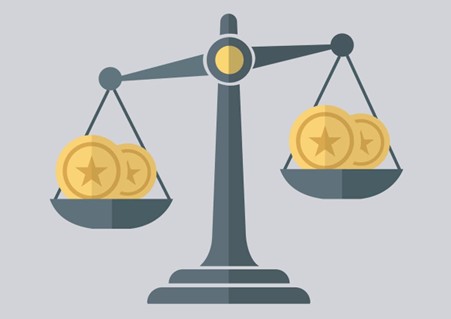
Puzzle 1: You are given nine gold coins that look identical. You are told that one of them is fake, and that this coin weighs less than the real ones. You are also given a set of old-fashioned balance scales that weigh groups of objects and show which group is heavier.

Question: What is the smallest number of weighings you need to carry out to determine which is the fake coin?

Puzzle 2: You’ve been transported back in time to help cook Christmas dinner. Your job is to bake the Christmas pie, but there aren’t even any clocks in the kitchen, let alone mobile phones. All you’ve got is two egg-timers: one that times exactly four minutes, and one that times exactly seven minutes. The scary chef tells you to put the pie in the oven for exactly ten minutes and no longer.

Question: How can you time ten minutes exactly, and avoid getting told off by the chef?

Dasha Efremova/Shutterstock

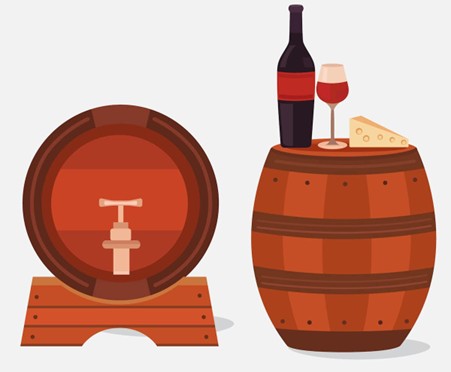
Puzzle 3: Having successfully cooked the Christmas pie, you are now entrusted with allocating the mulled wine – which is currently in two ten-litre barrels. The chef hands you one five-litre bottle and one four-litre bottle, both of which are empty. He orders you to fill the bottles with exactly three litres of wine each, without wasting a drop.

Question: How can you do this?

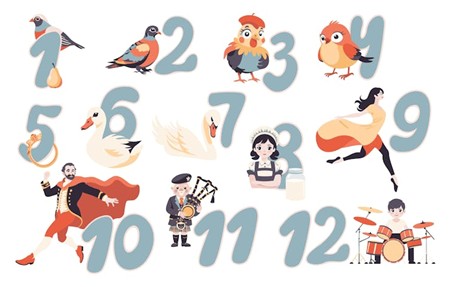
Puzzle 4: For the sake of this quiz, imagine there are not 12 but 100 days of Christmas. On the n-th day of Christmas, you receive £n as a gift, from £1 on the first day to £100 on the final day. In other words, far too many gifts for you to be able to count all the money!

Question: Can you calculate the total amount of money you have been given without laboriously adding all 100 numbers together?

(Note: a variation of this question was once posed to the German mathematician and astronomer Carl Friedrich Gauss in the 18th century.)

Puzzle 5: Here’s a Christmassy sequence of numbers. The first six in the sequence are: 9, 11, 10, 12, 9, 5 … (Note: the fifth number is 11 in some versions of this puzzle.)

Question: What is the next number in this sequence?

Garashchuk/Shutterstock

Puzzle 6: Take a look at the following list of statements:

Exactly one statement in this list of statements is false.

Exactly two statements in this list are false.

Exactly three statements in this list are false.

… and so on until:

Exactly 99 statements in this list are false.

Exactly 100 statements in this list are false.

Question: Which of these 100 statements is the only true one?

Puzzle 7: You are in a room with two other people, Arthur and Bob, who both have impeccable logic. Each of you is wearing a Christmas hat which is either red or green. Nobody can see their own hat but you can all see the other two.

You can also see that both Arthur’s and Bob’s hats are red. Now you are all told that at least one of the hats is red. Arthur says: “I do not know what colour my hat is.” Then Bob says: “I do not know what colour my hat is.”

Question: Can you deduce what colour your Christmas hat is?

Puzzle 8: There are three boxes under your Christmas tree. One contains two small presents, one contains two pieces of coal, and one contains a small present and a piece of coal. Each box has a label on it that shows what’s inside – but the labels have got mixed up, so every box currently has the wrong label on it. You are now told that you can open one box.

Question: Which box should you open, in order to then be able to switch the labels so that every label correctly shows the contents of its box?

Puzzle 9: Just before Christmas dinner, naughty Jack comes into the kitchen where there is one-litre bottle of orange juice and a one-litre bottle of apple juice. He decides to put a tablespoon of orange juice into the bottle of apple juice, then stirs it around so it’s evenly mixed.

But naughty Jill has seen what he did. Now she comes in, and takes a tablespoon of liquid from the bottle of apple juice and puts it into the bottle of orange juice.

Question: Is there now more orange juice in the bottle of apple juice, or more apple juice in the bottle of orange juice?

joto/Shutterstock

Puzzle 10: In Santa’s home town, all banknotes carry pictures of either Santa or Mrs Claus on one side, and pictures of either a present or a reindeer on the other. A young elf places four notes on a table showing the following pictures:

Santa   |   Mrs Claus   |   Present | Reindeer

Now an older, wiser elf tells him: “If Santa is on one side of the note, a present must be on the other.”

Question: Which notes must the young elf must turn over to confirm what the older elf says is true?

Bonus puzzle

If you need a festive tiebreaker, here’s a question that requires a little bit of algebra (and the formula “speed = distance/time”). It’s tempting to say this question can’t be solved because the distance is not known – but the magic of algebra should give you the answer.

Santa travels on his sleigh from Greenland to the North Pole at a speed of 30 miles per hour, and immediately returns from the North Pole to Greenland at a speed of 40 miles per hour

Tiebreaker: What is the average speed of Santa’s entire journey?

(Note: a non-Christmassy version of this question was posed by the American physicist Julius Sumner-Miller.)

For more such insights, log into www.international-maths-challenge.com.

*Credit for article given to Neil Saunders*